
Dubai Mainland Company Formation (2026): Cost, License, Visa & Setup Guide
Planning to establish a Mainland company in Dubai? This 2026 guide explains Dubai Mainland company formation, including licensing, business activities, ownership, office requirements, visas, costs, registration steps and key considerations for investors.
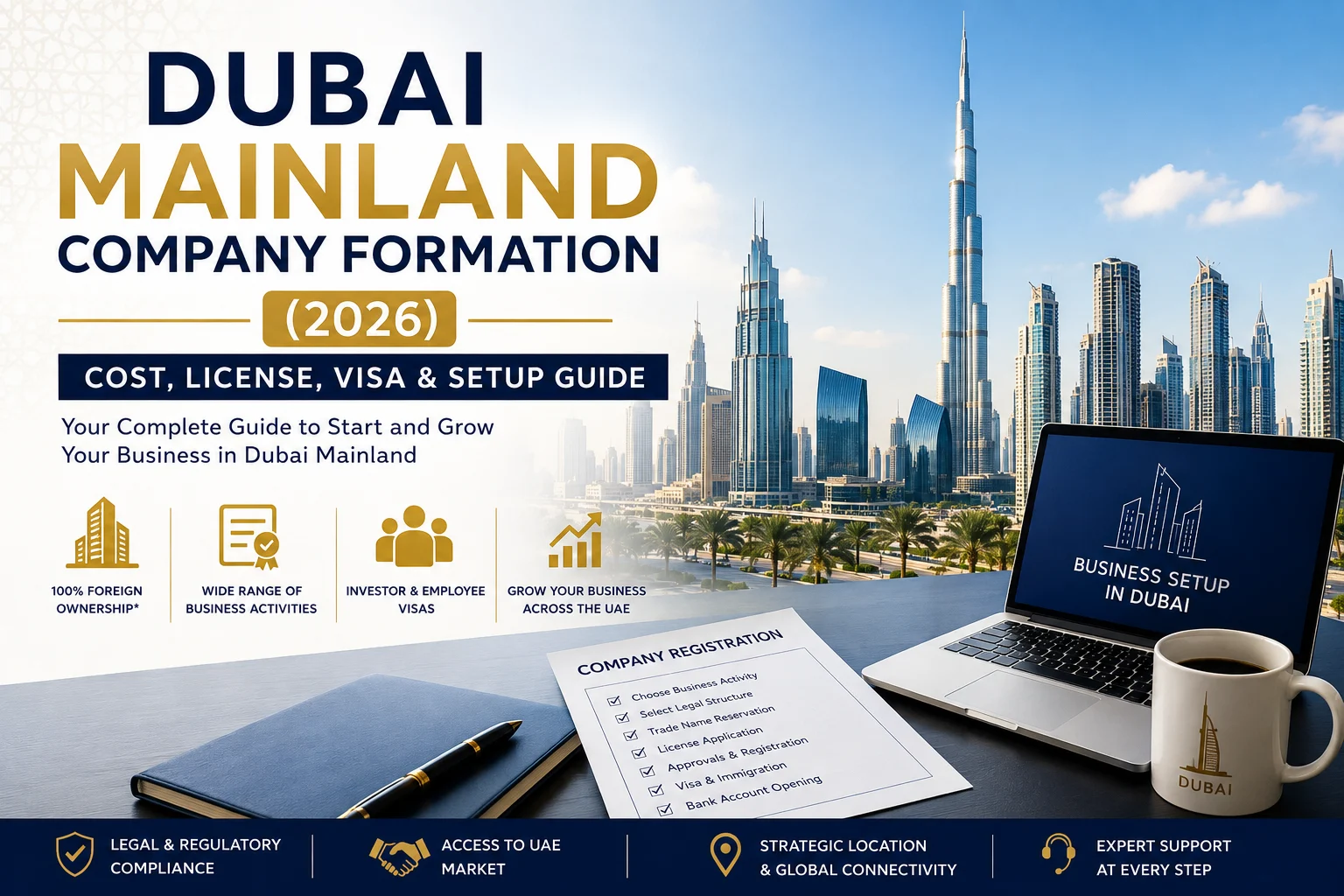
Dubai Mainland Company Formation (2026): Cost, License, Visa & Setup Guide
Introduction
Dubai continues to be one of the world's most attractive destinations for entrepreneurs, investors, SMEs, and international companies looking to establish and expand their presence in the Middle East.
For businesses that want broad access to the UAE market, the ability to work with customers across Dubai and the Emirates, and flexibility to expand their operations, Dubai Mainland Company Formation can be an attractive business structure.
However, establishing a Mainland company involves more than simply obtaining a trade license. Investors need to consider the correct business activity, legal structure, ownership requirements, office arrangements, visas, government approvals, corporate banking, taxation, and ongoing compliance.
Choosing the wrong structure or business activity at the beginning can also create additional costs, amendments, or regulatory complications later. For this reason, understanding how Mainland company formation works before starting the registration process is important.
This comprehensive 2026 guide explains Dubai Mainland Company Formation step by step, including business licenses, ownership, legal structures, registration requirements, office requirements, visas, costs, banking, taxation, and the key considerations international investors should understand before establishing a company in Dubai.
1. What Is a Dubai Mainland Company?
A Dubai Mainland company is a business established under Dubai's mainland licensing framework and authorized to conduct the activities specified on its business license.
Unlike a company incorporated within a specific Free Zone, a Mainland company is generally structured for businesses that intend to operate directly within Dubai and potentially across the wider UAE market, subject to the company's licensed activities and any applicable regulatory requirements.
A Mainland company may be suitable for:
1. Entrepreneurs establishing a local UAE business.
2. SMEs serving customers across Dubai and the UAE.
3. Professional service providers.
4. Trading and distribution businesses.
5. Companies requiring physical offices or operational facilities.
6. International companies expanding into Dubai.
7. Businesses seeking certain local commercial opportunities.
8. Companies planning to recruit employees and expand their UAE operations.
The appropriate company structure ultimately depends on the proposed activities, shareholders, target customers, operational requirements, and long-term objectives.
For this reason, investors should consider how the company will actually operate before deciding whether Dubai Mainland Company Setup is the most appropriate structure.
2. Dubai Mainland vs Free Zone Company
One of the first decisions investors face when considering Business Setup in Dubai is whether to establish a Mainland or Free Zone company.
Both structures can offer advantages, but they serve different business models.
Dubai Mainland Company
A Mainland company can be particularly relevant for businesses intending to develop substantial operations within the UAE market.
Depending on the licensed activities and applicable regulations, Mainland businesses can serve customers in Dubai and across the UAE.
Mainland structures can be attractive for businesses requiring:
1. Direct access to customers within the UAE.
2. A physical operational presence.
3. Larger teams and employee visa capacity.
4. Multiple permitted business activities.
5. Local commercial contracts.
6. Long-term expansion across the UAE.
7. Warehouses, offices, shops, or other operational premises where required.
Dubai Free Zone Company
A Free Zone company is established within one of the UAE's designated economic zones.
Free Zones can offer streamlined incorporation processes and different packages depending on the jurisdiction, activities, office requirements, and visa needs.
They can be particularly attractive for:
1. Startups.
2. Consultants.
3. International service providers.
4. Technology businesses.
5. E-commerce companies.
6. Entrepreneurs requiring flexible setup packages.
7. Companies primarily serving international markets.
The cheapest company formation package is therefore not automatically the best solution.
Investors should compare the intended activities, customers, office requirements, visa requirements, banking needs, operational model, and future expansion plans before selecting between Mainland and Free Zone structures.
3. Who Should Consider Dubai Mainland Company Formation?
Dubai Mainland Company Formation can be particularly suitable for entrepreneurs and companies planning substantial commercial operations within the UAE.
A Mainland structure may be worth considering when a business intends to:
1. Sell products or services directly within the UAE market.
2. Establish a physical office or operational facility in Dubai.
3. Recruit employees locally.
4. Work extensively with UAE-based companies.
5. Expand operations and staffing over time.
6. Conduct multiple permitted activities.
7. Establish additional locations where permitted.
8. Build a long-term commercial presence in the UAE.
International companies entering the Middle East may also consider Mainland Company Formation Dubai when Dubai will serve as an operational or regional business base.
For example, a company intending to establish a team, secure office space, develop UAE customers and expand its operations may have very different requirements from an individual consultant serving overseas clients remotely.
Understanding those differences before registration can prevent the business from selecting a structure that later becomes restrictive.
4. Can Foreign Investors Own 100% of a Dubai Mainland Company?
Foreign ownership rules in the UAE have changed considerably in recent years.
For many business activities, foreign investors can establish companies with 100% foreign ownership. However, investors should not assume that the same ownership rules apply to every activity or business structure.
The precise requirements can depend on:
1. The selected business activity.
2. The company's legal structure.
3. Applicable UAE regulations.
4. Whether the activity belongs to a regulated sector.
5. Additional government or regulatory approvals.
Certain activities can therefore remain subject to specific conditions or approval requirements.
For international entrepreneurs, the expansion of foreign ownership possibilities has made Dubai Mainland Company Formation significantly more attractive.
Many investors can establish and control their UAE businesses without automatically requiring a local shareholder solely because the company operates on the Mainland.
Nevertheless, ownership eligibility should be verified for the specific activity before proceeding with registration.
5. Choosing the Correct Business Activity
Selecting the correct activity is one of the most important stages of Dubai Mainland Company Setup.
The business activity defines what the company is authorized to do and can influence several other parts of the formation process.
The selected activity can affect:
1. The type of business license.
2. Government approvals.
3. Regulatory requirements.
4. Office or facility requirements.
5. Professional qualification requirements.
6. Company documentation.
7. Staffing requirements.
8. Corporate banking and compliance reviews.
Commercial Activities
Commercial activities can include various forms of trading, distribution and other commercial operations.
Professional Activities
Professional activities can include consultancy and specialized professional services.
Industrial Activities
Manufacturing and industrial operations can involve additional facility, environmental, technical or regulatory requirements.
Regulated Activities
Certain industries require approval from additional authorities before the company can commence the relevant activity.
These can include sectors connected with areas such as healthcare, education, transportation, financial services, food, engineering and other regulated industries.
This makes activity selection much more important than simply choosing a description that appears close to the company's business.
The license should accurately support the company's actual intended operations.
6. Types of Dubai Mainland Business Licenses
The appropriate Dubai Mainland License depends primarily on the activities the company intends to conduct.
Common license categories can include:
Commercial License
A commercial license is generally associated with trading and other commercial activities.
Depending on the approved activities, businesses may use this type of license for various forms of buying, selling, distribution and related commercial operations.
Professional License
Professional licensing is commonly associated with consultancy, professional services and specialized expertise-based activities.
Some professional activities may require evidence of qualifications, experience or additional regulatory approvals.
Industrial License
Industrial licensing can apply to manufacturing and certain production-related operations.
These businesses can have more extensive requirements concerning premises, facilities, technical approvals and other regulatory matters.
The precise classification depends on the approved activities.
Companies planning several activities should also confirm whether those activities can be combined under one Dubai Business License.
Not every combination of activities can necessarily be placed under the same license, particularly where different regulatory authorities or activity groups are involved.
7. Choosing the Legal Structure
The legal structure determines how the company is organized and can affect ownership, liability, governance and documentation.
The appropriate structure depends on factors including:
1. Number of shareholders.
2. Whether shareholders are individuals or corporate entities.
3. Nature of the business activities.
4. Ownership requirements.
5. Intended operations.
6. Future investment plans.
7. Corporate governance requirements.
8. Expansion strategy.
A commonly used structure for Mainland businesses is the Limited Liability Company (LLC), although other legal forms may be available depending on the company's circumstances.
International businesses may also consider branch structures or other permitted forms when establishing a presence in Dubai.
Corporate shareholders can require additional documentation compared with individual shareholders, particularly where foreign corporate documents need to be prepared or authenticated for use in the UAE.
Selecting the appropriate legal structure at the beginning is therefore important for both immediate registration and future expansion.
8. Selecting and Reserving a Company Name
Every new Mainland company requires an approved trade name.
The proposed name should comply with the applicable naming requirements and be available for registration.
Investors should ideally prepare several possible names in case their preferred option cannot be approved.
When selecting the name, consider:
1. Whether it reflects the company's business and brand.
2. Whether it complies with applicable naming rules.
3. Whether the name is available.
4. Whether any additional approval is required.
5. Whether the name supports the company's long-term branding strategy.
International businesses should also decide whether the Dubai company should use the same name as the international parent company or operate under a separate UAE brand.
Once an acceptable name has been selected, trade-name reservation forms part of the Mainland Company Formation Dubai process.
9. Step-by-Step Dubai Mainland Company Formation Process
The process for Dubai Mainland Company Formation depends on the selected business activities, legal structure, shareholders, office requirements and whether additional approvals are required.
Understanding the main stages before starting can help investors prepare the necessary documents and avoid unnecessary delays.
Step 1: Define Your Business Activities
Start by identifying exactly what products or services the company intends to provide.
The selected activities determine the type of Dubai Mainland License required and can affect external approvals, office requirements and other registration conditions.
Step 2: Choose the Legal Structure
Select a legal structure appropriate for the shareholders, activities and intended operations.
The structure can influence ownership, liability, documentation and corporate governance requirements.
Step 3: Select and Reserve the Trade Name
Choose a company name that complies with the applicable naming requirements.
Preparing several alternatives can be useful if the preferred name is unavailable.
Step 4: Obtain Initial Approval
Depending on the setup, initial approval may be required before proceeding with the remaining company formation procedures.
Initial approval does not necessarily mean that every regulatory requirement has been completed.
Step 5: Obtain Additional Approvals Where Required
Certain activities can require approvals from other government departments or regulatory authorities.
This is particularly important for specialized or regulated sectors.
Step 6: Prepare the Company Documents
Prepare the incorporation and shareholder documentation required for the selected legal structure.
Corporate shareholders can require additional documentation compared with individual shareholders.
Step 7: Arrange the Business Premises
Complete the required office, commercial premises, warehouse or other facility arrangements according to the company's activities and licensing requirements.
Step 8: Complete Registration and Licensing
Once the required documents, approvals and premises requirements are completed, the application can proceed toward final registration and licensing.
Step 9: Receive the Dubai Mainland License
After the application is approved and applicable fees are completed, the company can receive its Dubai Mainland License.
The business must operate according to the activities and conditions stated on its license.
10. Documents Required for Dubai Mainland Company Setup
Document requirements vary according to the shareholders, legal structure and business activities.
For individual shareholders, commonly requested information can include:
1. Passport copies.
2. UAE residence or entry information where applicable.
3. Emirates ID where applicable.
4. Contact information.
5. Shareholder details.
6. Proposed company names.
7. Selected business activities.
8. Manager information where required.
Additional documentation may be necessary depending on the circumstances.
Corporate Shareholders
When a company will be owned by another corporate entity, the documentation can be more extensive.
Depending on the structure and jurisdiction of the shareholder, documents may include:
1. Certificate of incorporation.
2. Commercial registration or company extract.
3. Memorandum or Articles of Association.
4. Board resolution.
5. Ownership information.
6. Ultimate Beneficial Owner information.
7. Authorized signatory documentation.
Foreign corporate documents may also be subject to applicable authentication or legalization requirements.
Preparing the required documents early can make Mainland Company Formation Dubai more efficient.
11. Office Requirements for a Dubai Mainland Company
Office requirements are an important consideration when planning Dubai Mainland Company Formation.
The appropriate premises depend on the company's activities, staffing requirements and applicable licensing conditions.
Depending on the business, companies may require:
1. Commercial office space.
2. Retail premises.
3. Warehouse facilities.
4. Industrial facilities.
5. Specialized operational premises.
6. Other approved workspace arrangements.
A consultancy business, for example, can have very different premises requirements from a restaurant, warehouse operation or industrial company.
Investors should therefore confirm the applicable office requirements before signing a long-term lease.
This is particularly important when the activity requires approval from an external authority or a facility that meets specific technical requirements.
12. Dubai Mainland Company Formation Cost
The cost of Dubai Mainland Company Formation varies according to the specific business.
There is no single setup price applicable to every Mainland company.
The overall cost can depend on:
1. Business activities.
2. License category.
3. Legal structure.
4. Number and type of shareholders.
5. Trade-name requirements.
6. Office or commercial premises.
7. Government approvals.
8. Immigration and establishment requirements.
9. Number of visas.
10. External regulatory approvals.
11. Documentation requirements.
12. Professional services required.
This is why investors should be careful when comparing advertisements offering a single low Dubai Mainland Company Setup price.
The advertised amount may represent only part of the actual cost required to establish and operate the company.
Initial Costs vs Ongoing Costs
Investors should calculate both the initial establishment expenses and the recurring costs of maintaining the company.
Recurring expenses can include:
1. License renewal.
2. Office rent.
3. Visa renewals.
4. Accounting and bookkeeping.
5. Corporate Tax compliance.
6. VAT compliance where applicable.
7. Regulatory renewals.
8. Other operational expenses.
A realistic budget should therefore consider the company's first year as well as future operating years.
13. UAE Residence Visas Through a Dubai Mainland Company
After establishing an eligible Mainland company, shareholders and businesses may proceed with applicable immigration and residence visa procedures.
Depending on the company and individual circumstances, visa applications can potentially involve:
1. Investors.
2. Shareholders.
3. Partners.
4. Managers.
5. Employees.
The number of employees a company can sponsor can depend on several factors, including its business activities, premises, organizational requirements and applicable immigration rules.
Companies expecting to build a larger workforce should consider these requirements during the initial Dubai Mainland Business Setup rather than waiting until after licensing.
This can influence the type and size of premises selected and the overall company formation budget.
14. Hiring Employees Through a Dubai Mainland Company
Businesses planning to recruit employees should consider workforce requirements from the beginning.
After the necessary company and immigration arrangements are completed, eligible businesses can proceed with employee-related procedures subject to applicable UAE employment and immigration requirements.
Companies should plan for:
1. Expected number of employees.
2. Job functions.
3. Office capacity.
4. Employment documentation.
5. Immigration requirements.
6. Payroll and employment compliance.
7. Employee insurance requirements where applicable.
A company expecting rapid growth may need a different setup from a business initially operated only by its owner.
Workforce planning should therefore form part of the wider Dubai Mainland Company Formation strategy.
15. Opening a Corporate Bank Account for a Dubai Mainland Company
Once the company has been established, it can apply for a UAE corporate bank account.
However, obtaining a Dubai Business License does not automatically guarantee approval for corporate banking.
Banks perform independent compliance, KYC and risk assessments before deciding whether to open an account.
Companies should be prepared to provide information about:
1. Business activities.
2. Shareholders and Ultimate Beneficial Owners.
3. Source of funds.
4. Expected customers.
5. Main suppliers.
6. Countries of operation.
7. Expected transaction volumes.
8. Expected currencies.
9. Business experience.
10. Commercial purpose of the company.
Depending on the bank and company profile, additional documentation may also be requested.
A clear website, professional business email, company profile and supporting commercial documents can help the bank understand the company's intended operations.
For international shareholders, planning the banking strategy alongside Company Formation Dubai can be particularly important.
16. Corporate Tax for Dubai Mainland Companies
Mainland businesses should understand their UAE Corporate Tax obligations as part of their ongoing compliance responsibilities.
Company formation and tax compliance should therefore be considered together rather than treating tax as something to review only after the business begins generating revenue.
Depending on the company's circumstances, responsibilities can include:
1. Corporate Tax registration.
2. Maintaining accounting records.
3. Preparing financial information.
4. Filing required tax returns.
5. Paying applicable tax liabilities.
6. Maintaining supporting documentation.
The precise tax treatment depends on the company's circumstances and applicable UAE tax legislation.
Businesses should maintain accurate financial records from the beginning of their operations.
17. VAT Requirements for Dubai Mainland Businesses
VAT is another important consideration for businesses operating in the UAE.
Whether a company must register for VAT depends on the applicable registration rules and the company's taxable activities and turnover.
Companies should monitor their revenue and transactions so they can identify when registration requirements may apply.
Businesses registered for VAT can also have ongoing obligations relating to:
1. Tax invoices.
2. Accounting records.
3. VAT returns.
4. Supporting documents.
5. Tax payments where applicable.
Ignoring tax compliance during the early stages of Dubai Mainland Company Setup can create unnecessary problems later.
18. External Approvals for Regulated Business Activities
Not every Dubai Mainland License follows exactly the same approval process.
Some activities can require authorization from additional government or regulatory bodies.
The requirements depend on the industry and specific activity.
Regulated areas can include sectors such as:
1. Healthcare.
2. Education.
3. Transportation.
4. Food and hospitality.
5. Engineering.
6. Financial services.
7. Industrial operations.
8. Other specialized activities.
An investor should therefore confirm whether external approval is required before committing to premises, equipment or other major expenses.
Some approvals can also require professional qualifications, technical documents, facility specifications or additional company information.
For complex businesses, understanding these requirements before registration is an important part of successful Dubai Mainland Company Formation.
19. How Long Does Dubai Mainland Company Formation Take?
There is no single formation timeline applicable to every Mainland business.
The time required can depend on:
1. Business activities.
2. Legal structure.
3. Shareholder documentation.
4. Trade-name approval.
5. Initial approvals.
6. Office requirements.
7. External regulatory approvals.
8. Corporate shareholder documentation.
9. Completeness of the application.
A straightforward company with complete documentation and activities that do not require extensive external approvals can generally progress more efficiently than a complex regulated business.
Investors should therefore focus on preparing the application correctly, rather than choosing a structure solely because it appears to offer the fastest registration.
20. Annual Renewal and Ongoing Compliance
Receiving the business license is not the end of the Dubai Mainland Company Formation process.
Companies have ongoing responsibilities that can include:
1. Business license renewal.
2. Office or tenancy renewal.
3. Immigration-related renewals.
4. Employee visa renewals.
5. Corporate Tax compliance.
6. VAT compliance where applicable.
7. Accounting and record keeping.
8. UBO-related requirements.
9. Updating company information when changes occur.
10. Maintaining regulatory approvals where required.
Businesses should monitor important renewal and compliance dates to avoid interruptions or potential penalties.
A strong company setup strategy therefore considers not only how to establish the company, but also how to maintain it correctly after incorporation.
21. Advantages of Dubai Mainland Company Formation
Choosing Dubai Mainland Company Formation can provide important advantages for businesses planning to establish long-term operations in the UAE.
The exact benefits depend on the company's activities and structure, but key advantages can include:
Access to the UAE Market
A Mainland structure can be suitable for businesses that intend to serve customers directly within Dubai and across the wider UAE, subject to their licensed activities and applicable regulations.
Wide Range of Business Activities
Dubai provides a broad range of commercial, professional, industrial and specialized activities.
This allows entrepreneurs to select activities that closely match their actual business model.
100% Foreign Ownership for Many Activities
Many permitted activities can be established with 100% foreign ownership, subject to the specific activity, legal structure and applicable regulations.
Business Expansion Opportunities
A Dubai Mainland Company can be suitable for businesses planning to increase their workforce, expand operations, add permitted activities or establish a stronger physical presence in the UAE.
Access to Dubai's Business Ecosystem
Dubai provides access to an extensive ecosystem of customers, suppliers, professional services, logistics networks, financial institutions and international businesses.
These advantages make Mainland Company Formation Dubai an important option for both local entrepreneurs and international investors.
22. Potential Challenges of Dubai Mainland Company Setup
Although a Mainland structure can provide significant operational flexibility, investors should also understand the potential challenges.
These can include:
1. Higher total setup costs for certain business models.
2. Office or premises requirements.
3. Additional approvals for regulated activities.
4. Immigration and employee-related requirements.
5. Annual license and premises renewals.
6. Accounting and tax compliance.
7. More complex documentation for corporate shareholders.
8. Additional regulatory requirements for specialized industries.
These factors do not necessarily make a Mainland structure unsuitable.
Instead, they demonstrate why Dubai Mainland Company Setup should be planned according to the actual requirements of the business.
23. Common Dubai Mainland Company Formation Mistakes
Avoiding common mistakes can save investors time and money.
Mistake 1: Choosing the Wrong Business Activity
The selected activity should accurately represent what the company intends to do.
An incorrect activity can create problems with licensing, banking, contracts or regulatory approvals.
Mistake 2: Selecting a Structure Based Only on Price
The cheapest setup is not necessarily the most suitable.
Investors should evaluate operational flexibility, visas, premises, banking and future expansion.
Mistake 3: Ignoring External Approvals
Certain activities require additional regulatory approval.
These requirements should be identified before committing significant resources to the setup.
Mistake 4: Underestimating Office Requirements
The premises required can vary considerably according to the activity and size of the business.
Mistake 5: Not Planning for Employees
Businesses expecting to hire should consider future workforce and immigration requirements during the initial setup.
Mistake 6: Assuming Banking Is Automatic
Obtaining a Dubai Mainland License does not guarantee corporate bank account approval.
Mistake 7: Ignoring Ongoing Compliance
License renewal, accounting, Corporate Tax, VAT where applicable, immigration requirements and other compliance obligations should be incorporated into the company's operating plan.
Avoiding these mistakes can create a stronger foundation for successful Business Setup in Dubai.
24. Dubai Mainland Company Formation for International Investors
Dubai attracts entrepreneurs and companies from around the world.
For international investors, Dubai Mainland Company Formation can provide a platform for establishing operations in the UAE and potentially supporting wider regional expansion.
However, international company formation can involve additional considerations.
These can include:
1. Foreign individual shareholders.
2. Corporate shareholders.
3. Ultimate Beneficial Owner information.
4. Overseas corporate documents.
5. Board resolutions.
6. Document authentication or legalization where applicable.
7. International banking requirements.
8. Multinational ownership structures.
9. Employee relocation.
10. Regional expansion planning.
An international company should therefore consider the UAE entity as part of its broader corporate strategy rather than treating the business license as an isolated administrative requirement.
25. Dubai Mainland Company Setup for Startups and SMEs
Startups and SMEs often need to balance cost with flexibility.
A new company may initially require only a small team and limited office space. However, successful growth can quickly create additional requirements.
These may include:
1. More employees.
2. Additional visas.
3. Larger premises.
4. New business activities.
5. Additional shareholders.
6. New customer segments.
7. Greater banking requirements.
For this reason, startups should consider both their immediate budget and their expected growth when planning Dubai Mainland Business Setup.
A structure that appears inexpensive during the first year may become less suitable if the business needs significant changes shortly afterward.
26. Dubai Mainland Setup for Established International Companies
Established businesses often have more complex requirements than startups.
An international company expanding into Dubai may need:
1. Corporate ownership arrangements.
2. Multiple business activities.
3. Larger office facilities.
4. Significant employee visa capacity.
5. Specialized regulatory approvals.
6. Corporate banking facilities.
7. Internal governance arrangements.
8. Accounting and tax systems.
9. Integration with its international operations.
Corporate shareholders may also require more extensive documentation than individual entrepreneurs.
Planning these elements before Company Formation Dubai can help the UAE operation align with the wider international organization.
27. Can You Add Activities After Company Formation?
Business requirements can change as a company grows.
A Mainland business may later want to introduce additional products or services.
Depending on the activities and applicable requirements, it may be possible to amend the business license and add permitted activities.
However, companies should verify:
1. Whether the new activity can be combined with existing activities.
2. Whether additional approvals are required.
3. Whether the legal structure remains appropriate.
4. Whether premises requirements change.
5. Whether the company requires additional documentation.
Some activity combinations may require different licensing or approval arrangements.
Therefore, companies planning several business lines should consider their future activities during the initial Dubai Mainland Company Formation process whenever possible.
28. Can You Change Shareholders or Company Details Later?
Businesses can evolve after incorporation.
Depending on the company structure and applicable procedures, changes can potentially involve:
1. Shareholders.
2. Managers.
3. Ownership percentages.
4. Trade name.
5. Business activities.
6. Office address.
7. Other company information.
Such changes generally require formal amendment procedures and supporting documentation.
For companies with multiple shareholders, clear corporate documentation and governance arrangements can make future changes easier to manage.
29. Planning Your Dubai Mainland Company for Future Growth
A strong Dubai Mainland Company Setup should support the company's future, not only its immediate requirements.
Before establishing the business, consider where you expect the company to be in the next three to five years.
Ask questions such as:
1. Will we hire more employees?
2. Will we require larger premises?
3. Will we introduce additional services?
4. Will we import or distribute products?
5. Will we add shareholders or investors?
6. Will we expand into other Emirates?
7. Will Dubai become our regional headquarters?
8. Will we expand into other GCC markets?
Thinking about these questions before incorporation can reduce unnecessary restructuring later.
30. How to Choose a Business Setup Consultant in Dubai
A professional consultant can help investors understand the different requirements involved in Dubai Mainland Company Formation.
When choosing a consultant, consider whether they can:
1. Understand your actual business model.
2. Explain Mainland and Free Zone differences.
3. Help identify appropriate business activities.
4. Explain licensing requirements.
5. Identify potential external approvals.
6. Provide transparent cost information.
7. Support company documentation.
8. Assist with amendments and renewals.
9. Provide visa and immigration guidance.
10. Support corporate banking preparation.
11. Assist with tax and compliance requirements.
A consultant should not simply recommend the cheapest available license.
The objective should be to identify a company structure that supports the investor's actual operations and future plans.
31. How Gold Altairgo Supports Dubai Mainland Company Formation
Gold Altairgo supports entrepreneurs, SMEs and international investors establishing and expanding businesses in Dubai and across the UAE.
Our approach starts with understanding the proposed activities, shareholders, operational requirements and future objectives before determining the appropriate setup pathway.
Our support can include:
1. Dubai Mainland Company Formation
2. Dubai Mainland Company Setup
3. Business activity selection.
4. Trade license guidance.
5. Company registration support.
6. Mainland and Free Zone comparison.
7. License amendments and renewals.
8. Shareholder restructuring.
9. Government approval coordination.
10. Investor and employee visa guidance.
11. Corporate banking preparation and guidance.
12. Corporate Tax support.
13. VAT support.
14. Ongoing corporate compliance assistance.
This approach allows investors to consider company formation, licensing, banking, taxation and ongoing compliance as connected parts of the same business strategy.
32. Dubai Mainland Company Formation Checklist
Before starting the registration process, use this checklist to review the main requirements.
Before Applying
1. Define your exact business activities.
2. Determine your target customers.
3. Confirm whether Mainland is appropriate.
4. Select the legal structure.
5. Confirm foreign ownership eligibility.
6. Prepare proposed company names.
7. Identify external approvals.
8. Determine office requirements.
9. Estimate visa requirements.
10. Calculate the complete setup budget.
During Company Formation
1. Reserve the trade name.
2. Complete required approvals.
3. Prepare shareholder documentation.
4. Complete incorporation documents.
5. Arrange the required premises.
6. Complete licensing requirements.
7. Pay applicable fees.
8. Obtain the business license.
After Company Formation
1. Complete applicable immigration procedures.
2. Arrange eligible investor and employee visas.
3. Prepare for corporate banking.
4. Review Corporate Tax requirements.
5. Review VAT obligations where applicable.
6. Establish accounting and record-keeping procedures.
7. Monitor license and visa renewal dates.
8. Maintain required regulatory approvals.
This checklist can help investors approach Dubai Mainland Company Formation as a complete business establishment process rather than simply a license application.
33. Is Dubai Mainland Company Formation Right for Your Business?
There is no single company structure that is best for every entrepreneur.
A Mainland company may be suitable if your business requires direct UAE operations, employees, physical premises, local customers or significant future expansion.
A Free Zone structure may be more appropriate for certain international, consulting, technology or other business models.
The decision should therefore be based on:
1. Business activities.
2. Target customers.
3. Ownership.
4. Office requirements.
5. Employees and visas.
6. Budget.
7. Banking requirements.
8. Regulatory requirements.
9. Future expansion.
Comparing these factors carefully can help investors choose a structure that supports both their current requirements and long-term strategy.
34. Conclusion
Dubai Mainland Company Formation can provide entrepreneurs and international companies with a strong platform for establishing and expanding operations in the UAE.
However, successful company formation requires more than obtaining a Dubai Mainland License.
Investors should carefully evaluate their activities, legal structure, ownership, office requirements, visas, costs, external approvals, banking needs, taxation and ongoing compliance.
Planning these elements before registration can reduce unnecessary amendments and help establish a company structure aligned with the business's long-term objectives.
Whether you are launching a startup, expanding an existing company or establishing an international business presence in Dubai, the right preparation can make the Mainland Company Formation Dubai process more efficient and support future growth.
Start Your Dubai Mainland Company Formation
Planning to establish a Mainland business in Dubai?
Gold Altairgo provides professional support throughout the company formation process, from selecting the appropriate activities and legal structure to licensing, government approvals, visas, corporate banking preparation, taxation and ongoing compliance.
Contact Gold Altairgo today to discuss your Dubai Mainland Company Formation requirements and identify a setup solution aligned with your business objectives.
Mainland vs Free Zone in UAE (2026): Which Is Right for Your Business?
Business Setup in Dubai (2026): Costs, Licenses & Step-by-Step Guide
How Much Does It Cost to Start a Business in Dubai in 2026? Complete Cost Guide
10 Common UAE Business Setup Mistakes (2026): How to Avoid Costly Errors
For the full end-to-end process, see our pillar guide: how to start a company in the UAE.
Once trading begins, check whether your turnover triggers VAT: our guide to VAT registration in the UAE explains the mandatory and voluntary thresholds, the documents required and the EmaraTax process.
Frequently asked questions
What is Dubai Mainland Company Formation?
Dubai Mainland Company Formation is the process of establishing a business under Dubai's mainland licensing framework. It can be suitable for entrepreneurs and companies that want to operate within Dubai and across the wider UAE market, subject to their licensed activities and applicable regulations.
How much does Dubai Mainland Company Formation cost in 2026?
The cost of Dubai Mainland Company Formation varies according to the business activities, license type, legal structure, office requirements, number of visas, shareholders and any external approvals required. Investors should calculate both initial setup costs and ongoing expenses such as license renewal, office rent and compliance.
Can foreigners own 100% of a Dubai Mainland company?
Many business activities in Dubai allow 100% foreign ownership. However, ownership requirements can depend on the specific activity, legal structure and applicable regulations, so investors should verify the requirements for their proposed business before registration.
What is the difference between a Dubai Mainland company and a Free Zone company?
A Dubai Mainland company and a Free Zone company operate under different licensing frameworks. The appropriate option depends on factors such as business activities, target customers, office requirements, visas, budget and expansion plans. Neither structure is automatically better for every business.
What documents are required for Dubai Mainland Company Setup?
Requirements vary according to the company structure and shareholders. Common information can include passport copies, shareholder details, proposed company names, selected business activities and manager information. Corporate shareholders may require additional incorporation, ownership and authorization documents.
Do I need an office for a Dubai Mainland company?
Office and premises requirements depend on the company's business activities, licensing conditions and operational needs. Some businesses may require commercial offices, while others can require retail, warehouse, industrial or specialized premises.
Can a Dubai Mainland company sponsor residence visas?
Eligible Mainland companies can proceed with applicable investor, shareholder and employee residence visa procedures. Visa capacity and requirements can depend on factors such as the company structure, business activities, premises and applicable immigration rules.
Can I open a corporate bank account with a Dubai Mainland License?
A Dubai Mainland company can apply for a corporate bank account after establishment. However, account approval is subject to the bank's independent KYC, compliance and risk assessment, and holding a business license does not guarantee approval.
How long does Dubai Mainland Company Formation take?
The timeline depends on the business activities, legal structure, shareholder documentation, trade-name approval, premises requirements and whether external regulatory approvals are needed. Applications with complete documentation and straightforward activities can generally progress more efficiently.
Can Gold Altairgo help with Dubai Mainland Company Formation?
Yes. Gold Altairgo supports entrepreneurs, SMEs and international investors with Dubai Mainland Company Formation, including activity selection, company registration, licensing, government approvals, visa guidance, corporate banking preparation, Corporate Tax, VAT and ongoing compliance support.
Continue exploring
Related services
- Company FormationMainland, Free Zone, Offshore, branch and representative office setup across the UAE and GCC.
- Corporate AdvisoryStructuring, M&A, shareholder restructuring and expansion advisory for boards and founders.
- Business Admin & Back-OfficeMonthly outsourced administration and structured back-office support for UAE SMEs and growing companies.
Country guides
Related articles
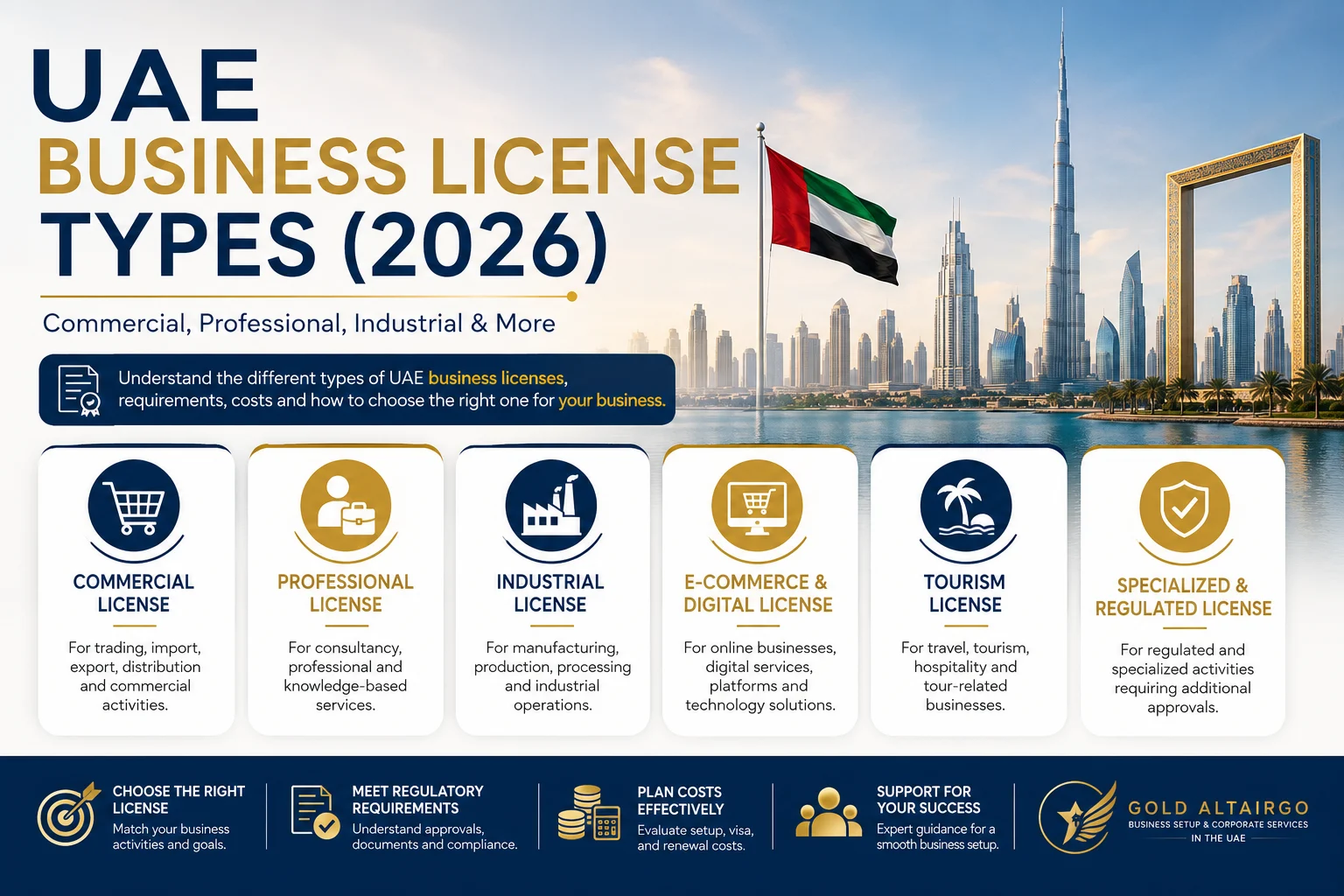
UAE Business License Types (2026): Commercial, Professional, Industrial & More
Explore the main UAE business license types in 2026 and learn how commercial, professional, industrial and digital licenses differ, including activities, costs and setup considerations.
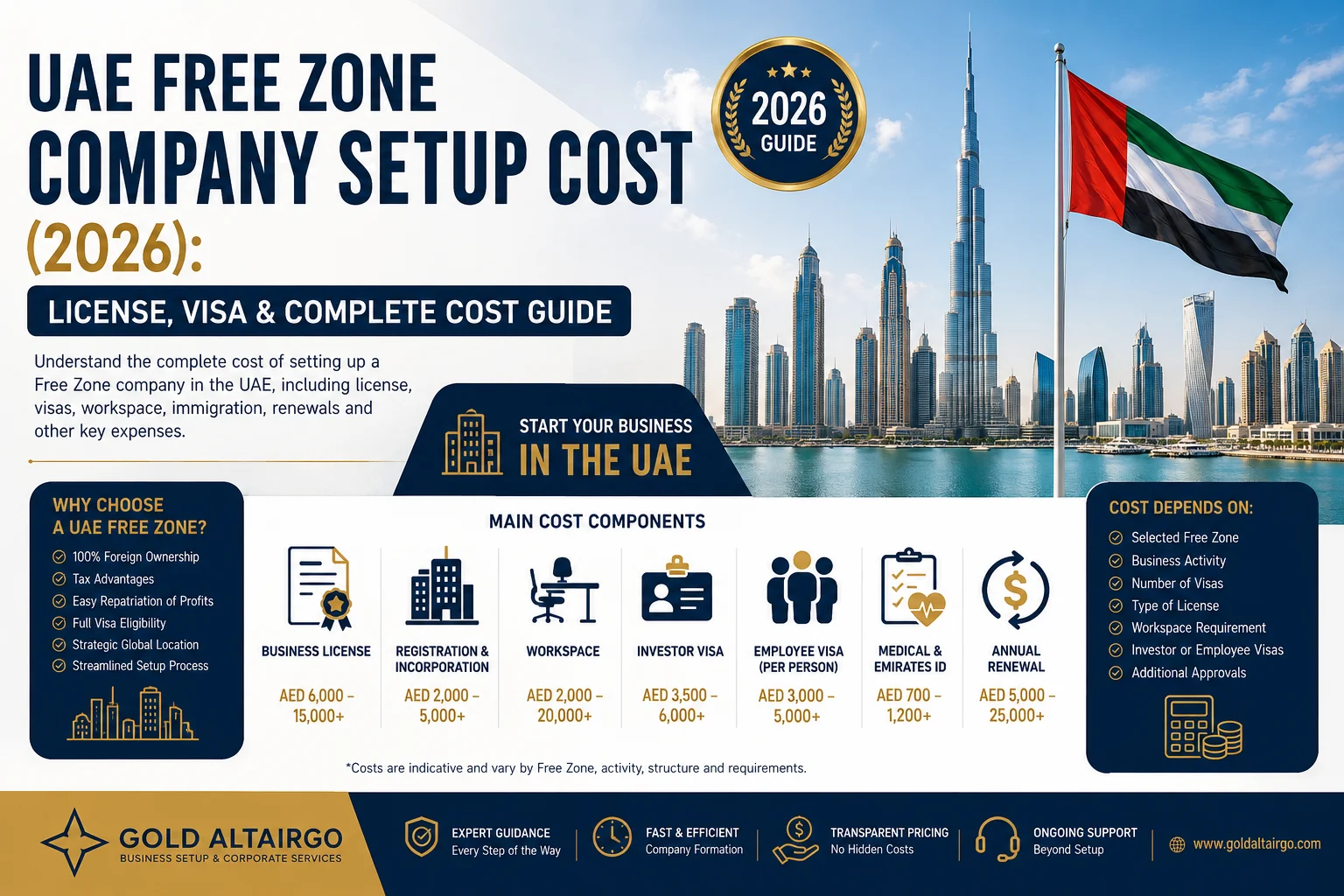
UAE Free Zone Company Setup Cost (2026): License, Visa & Complete Cost Guide
Understand the UAE Free Zone company setup cost in 2026, including license fees, visas, workspace, immigration, renewal costs and other expenses investors should consider.
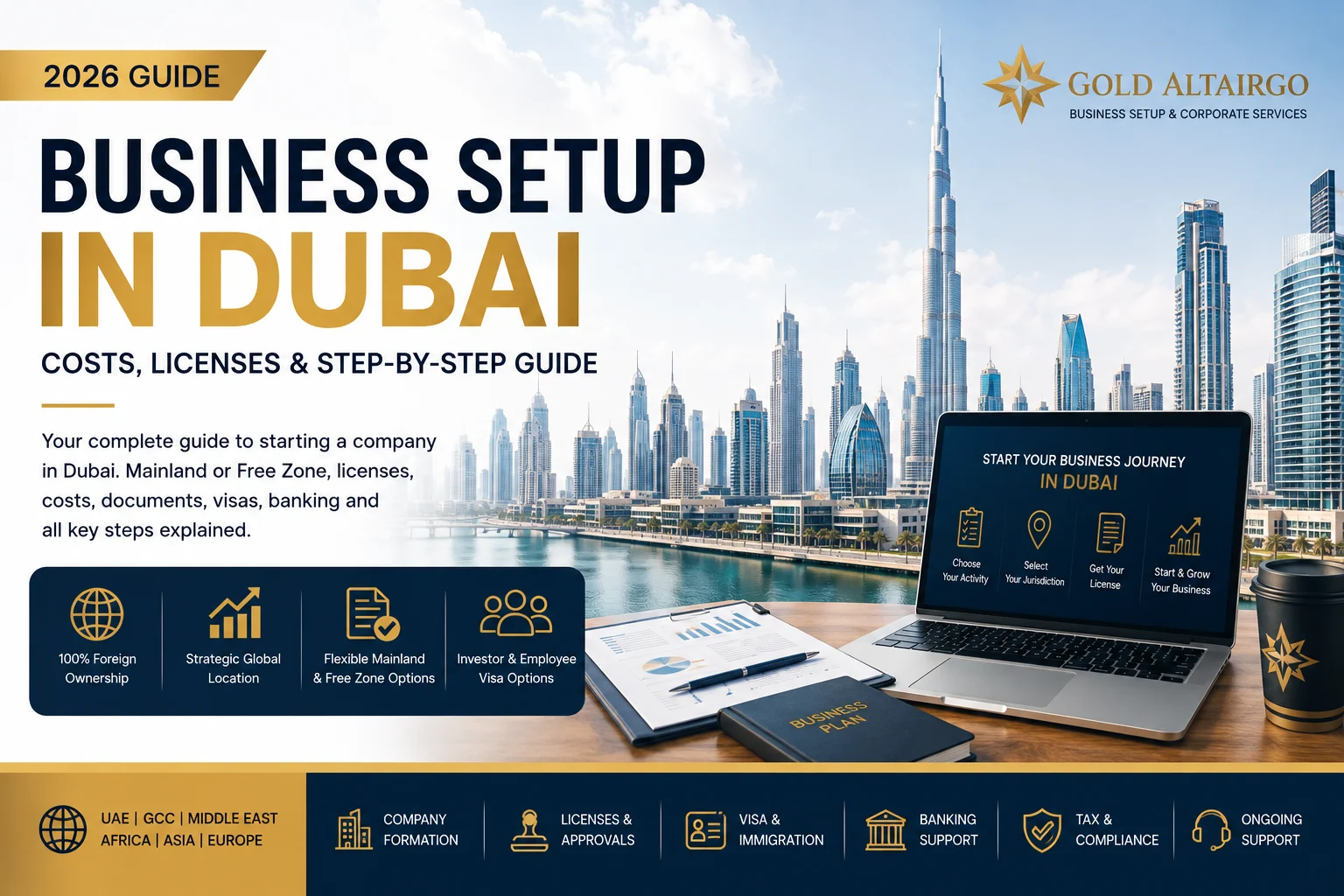
Business Setup in Dubai (2026): Costs, Licenses & Step-by-Step Guide
Discover how Business Setup in Dubai works in 2026. Compare Mainland and Free Zone options, company formation costs, licenses, documents, visas, banking, and registration requirements.
Stay ahead with UAE business insights
Monthly briefings from our advisory team: regulatory updates, tax alerts, growth strategies and market opportunities across the UAE and GCC.
- • Business updates and regulatory news
- • Corporate Tax and VAT insights
- • Growth strategies and market opportunities