
How to Start a Company in the UAE: Complete 2026 Company Formation Guide
A practical 2026 guide to starting a company in the UAE: mainland vs free zone, the step-by-step registration process, requirements and documents, costs, timelines, ownership rules, banking and tax compliance.
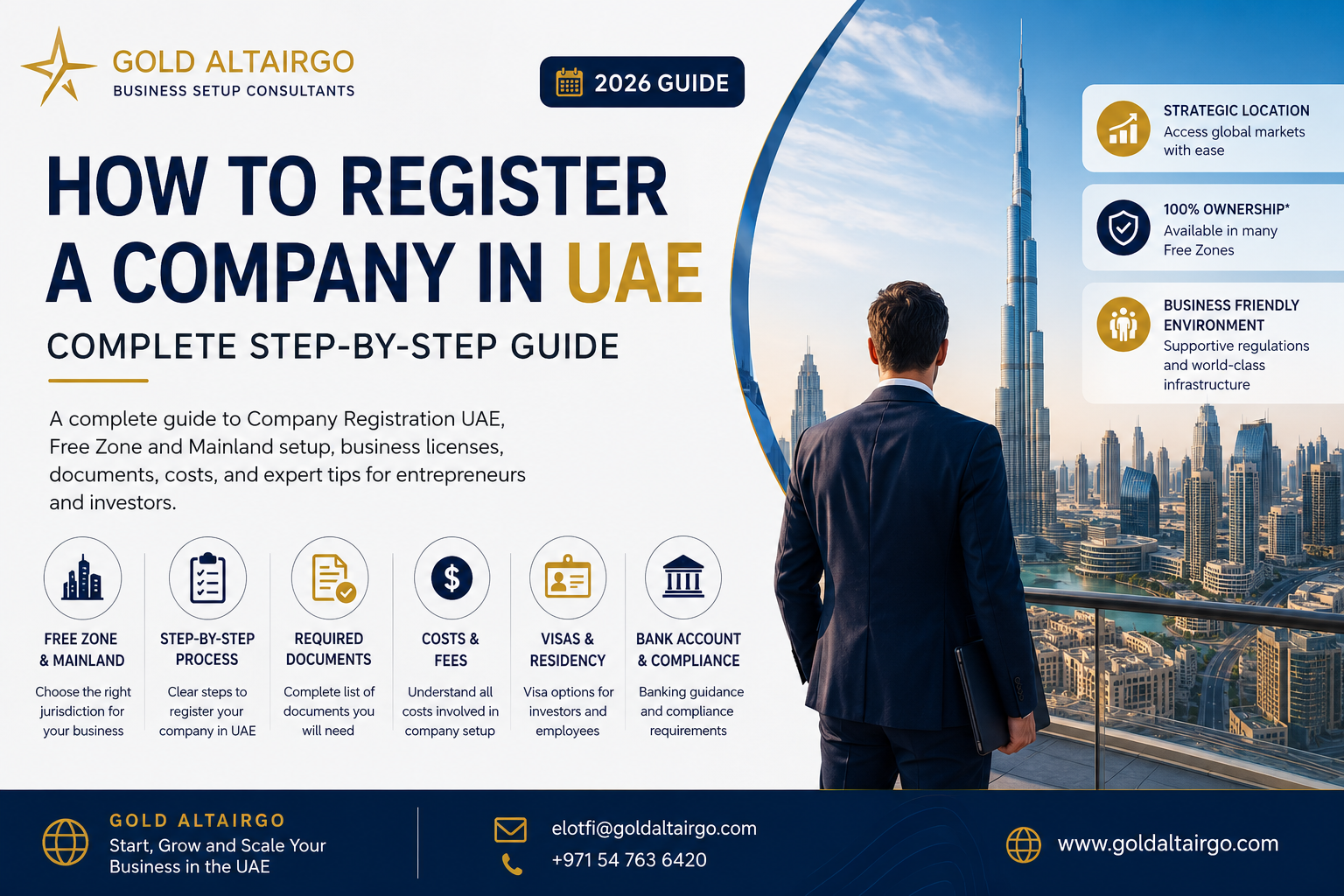
Starting a company in the UAE is a structured, permission-based process rather than a single registration form. In practice, most founders move through the same sequence: choosing a business activity, deciding between mainland and free zone, selecting the legal structure, reserving a trade name, obtaining any required approvals, issuing the business licence, completing visa and immigration procedures where applicable, opening a corporate bank account, and registering for tax where the relevant thresholds or rules apply.
The detail behind each step changes depending on the emirate, the licensing authority and the activity you intend to carry out. A management-consultancy licence, a general-trading licence and a regulated financial activity do not follow identical paths, and requirements and government charges can be updated by the authorities.
This guide explains the UAE company formation process end to end, in the order you will actually experience it, with the practical decisions that tend to matter most later: operating scope, office requirements, visa capacity, banking readiness and ongoing compliance.
UAE Company Formation: Mainland vs Free Zone
The first structural decision in any UAE company formation is whether to register on the mainland (licensed by the emirate's economic department) or inside a free zone (licensed by that zone's own authority). Neither option is universally better. The right answer depends on who your customers are, whether you need a physical presence, how many visas you need and whether your activity is regulated.
As a broad orientation: free zones are often chosen by companies serving international clients or operating within the zone, while mainland licences are commonly chosen by businesses that need to contract and operate directly across the local UAE market. Specific conditions vary by authority and activity, and some activities are only available in one route or the other.
| Factor | Mainland | Free zone |
|---|---|---|
| Ownership | Full foreign ownership is available for many activities; some strategic or regulated activities remain subject to specific conditions | Full foreign ownership is a standard feature of most free zones |
| Operating scope | Can generally contract and trade directly across the UAE local market, subject to the licensed activity | Primarily within the zone and internationally; onshore trading usually requires additional arrangements such as a distributor, agent or a mainland presence |
| Office requirements | Usually a tenancy for physical premises registered with the relevant authority (for example Ejari in Dubai) | Often flexible options ranging from flexi-desk packages to dedicated offices, depending on the zone and visa count |
| Licensing authority | The economic development department of the relevant emirate, plus external regulators where the activity requires it | The free zone authority itself, which issues the licence and handles registration |
| Visa considerations | Visa capacity is typically linked to the licensed activity and the size of the leased premises | Visa capacity is typically defined by the chosen package and facility type |
| Often suits | Retail, contracting, local services, government or onshore B2B work, businesses needing wide local reach | Consulting, digital and media, e-commerce, holding structures, trading with international counterparties, regional headquarters |
If you are weighing the two routes in detail, our dedicated comparison covers the trade-offs case by case: Free Zone vs Mainland UAE (2026).
How to Start a Company in the UAE Step by Step
The following sequence reflects how UAE company registration usually runs in practice. Some steps run in parallel, and a few are skipped entirely depending on the authority and activity.
Choose your business activity. Every licence is tied to activities listed by the authority. The activity determines the licence category, whether external approvals apply and, in many cases, which jurisdictions are open to you. Choose the activity that matches what you will actually invoice for, not the one that sounds closest.
Choose mainland or free zone. Base this on your customers, contracts, premises and visa needs rather than on the headline licence price. Changing jurisdiction later usually means re-licensing, not amending.
Select the legal structure. Common forms include a limited liability company, a free zone company or establishment, a sole establishment, a civil company for certain professions, or a branch of an existing foreign or UAE company. The structure affects shareholding, liability, documentation and how a bank views the entity.
Choose and reserve the trade name. Naming rules are enforced: names should reflect the activity, avoid restricted or religious terms, and avoid conflicts with existing registrations. Reservation is typically valid for a limited period.
Obtain initial approval where required. Initial approval confirms the authority has no objection in principle. Regulated activities such as financial services, healthcare, education, legal services, transport or food handling generally require approval from the relevant external regulator as well.
Prepare incorporation documentation. This usually includes shareholder identification, the memorandum or articles of association, board or shareholder resolutions for corporate shareholders, and any attestations or legalisations the authority requires for foreign documents.
Meet office or flexi-desk requirements where applicable. Mainland registration normally requires registered premises with a valid tenancy contract. Free zones may accept flexi-desk or shared facilities, with dedicated offices typically required as visa numbers increase.
Obtain the business licence. Once approvals, documentation and premises are in place and the applicable fees are paid, the authority issues the trade licence and the company's registration documents.
Complete immigration and visa procedures where applicable. This generally involves an establishment card or immigration file, entry permits, medical testing, Emirates ID registration and visa stamping for investors and employees, subject to eligibility.
Open a corporate bank account. Banks run their own onboarding and compliance review. Preparing a clear business profile, expected transaction flows and supporting contracts materially improves the process.
Complete applicable tax registrations and compliance. Depending on the entity and its circumstances this can include corporate tax registration, VAT registration where the relevant thresholds or rules apply, bookkeeping, and any economic substance or ultimate beneficial ownership filings that apply to your structure.
Choosing the Right Business Activity
Your business activity is the foundation of the whole registration. Licensing authorities work from published activity lists, and the activity you select determines the licence category, which jurisdictions will accept the application, whether an external regulator must approve you, and how a bank later reads your file.
Match the activity to your invoices. If you will consult, trade goods and run an online store, confirm whether one licence can cover all of it or whether additional activities must be added.
Check for restricted or regulated activities. Healthcare, education, legal, financial services, transport, food handling and similar sectors normally require sign-off from the competent regulator in addition to the licensing authority.
Consider multiple activities carefully. Some authorities allow grouped activities within one licence category; others charge per activity or refuse combinations across categories.
Think ahead. Adding activities later is possible in most cases but involves amendment procedures, fees and sometimes new approvals.
Licence categories and what each one covers are explained in our guide to UAE business licence types.
Choosing a Legal Structure
The legal structure defines who owns the company, how liability sits, what documents are required and how the entity is perceived by banks and counterparties. This is a commercial and legal decision, so confirm the final choice with the licensing authority and, where relevant, your own legal adviser.
Limited liability company (LLC). A common mainland form for trading and service businesses with one or more shareholders.
Free zone company or establishment (FZC / FZE / FZ-LLC). The standard forms inside free zones, distinguished mainly by single or multiple shareholders and by the naming conventions of each zone.
Sole establishment. Owned by one natural person, typically for certain professional activities, with the owner personally exposed to the obligations of the business.
Civil company. Used in some emirates for recognised professional practices.
Branch or representative office. An extension of an existing UAE or foreign parent company rather than a separate legal entity, with its own documentation and attestation requirements.
Holding structures. Sometimes used where shareholders want to hold operating entities or assets under a separate vehicle.
Availability of each structure depends on the emirate, the free zone and the activity. Corporate shareholders usually add attestation and legalisation steps for parent-company documents.
UAE Company Registration Requirements
There is no single national checklist for registering a company in the UAE. Requirements depend on four variables working together:
Jurisdiction — the emirate and whether you register mainland or in a specific free zone.
Business activity — including whether it is regulated and requires external approval.
Legal structure — individual shareholders, corporate shareholders, or a branch of an existing company.
Licensing authority — each authority sets its own documentation standards, premises rules and visa allocations.
In general terms, most authorities will expect a permitted and clearly defined activity, an approved trade name, identified shareholders and managers with valid identification, constitutional documents appropriate to the structure, a compliant address or facility, and payment of the applicable government and authority charges. Licence categories themselves differ; our overview of UAE business licence types explains commercial, professional and industrial licensing in more detail.
Documents Required to Register a Company in the UAE
Use the following as a preparation checklist rather than a definitive list. Your authority will confirm its own requirements during the application.
Typically requested
- ✔ Passport copies for every shareholder, director and manager
- ✔ Passport-style photographs to the authority's specification
- ✔ Proposed trade name options and the selected business activities
- ✔ Completed application forms from the licensing authority
- ✔ Memorandum or articles of association appropriate to the legal structure
- ✔ Proof of address or facility (tenancy contract, Ejari, or free zone facility agreement)
May be requested depending on circumstances
- ! UAE residence visa, entry stamp or Emirates ID for resident shareholders
- ! No-objection certificate where an existing sponsor or employment relationship applies
- ! Attested or legalised corporate documents for corporate shareholders, plus a board resolution and certificate of incorporation
- ! Power of attorney where signing is delegated
- ! Qualifications, professional licences or experience certificates for regulated professions
- ! External regulator approvals for restricted or specialised activities
- ! Business plan or financial projections, often requested by free zones and by banks at onboarding
How Much Does It Cost to Start a Company in the UAE?
There is no single UAE company setup price, and any provider quoting one figure for "the UAE" is describing one specific package rather than your situation. Total cost is driven by a combination of factors:
mainland versus free zone registration
the specific licensing authority and its fee schedule
the business activity and licence category
office requirements, from flexi-desk to leased premises
the number of visas required, and establishment or immigration file costs
external approvals for regulated activities
the legal structure, including corporate shareholders and document attestation
other applicable government charges, registration and card fees
Budget for the second year as well as the first: licence renewal, facility renewal, visa renewals and accounting or compliance support are recurring. For worked breakdowns by scenario see our guides on UAE business licence costs and business setup cost in Dubai. Government fees are set by the authorities and can change.
How Long Does UAE Company Registration Take?
Timelines vary and cannot be guaranteed. In straightforward cases with individual shareholders already in the UAE, complete documentation and an unregulated activity, licensing can move quickly. Other cases take considerably longer.
The main factors that extend a timeline are: external approvals for regulated activities, corporate shareholders requiring attested documents from abroad, name or activity revisions requested by the authority, premises and tenancy registration, and incomplete or inconsistent documentation. Visa processing and bank onboarding run after licensing and follow their own timelines.
Can Foreigners Own 100% of a UAE Company?
In many cases, yes. Free zones have long allowed full foreign ownership, and reforms to the commercial companies framework extended full foreign ownership to a wide range of mainland activities. However, this is not automatic across every activity: certain strategic, regulated or restricted activities remain subject to specific conditions set by the competent authorities, and requirements can differ between emirates.
Before assuming full ownership is available for your plan, confirm the position for your exact activity code with the relevant licensing authority — that check is part of any competent setup assessment.
Can a Non-Resident Register a UAE Company?
Non-residents can generally establish and own a UAE company without holding UAE residency first, and in many cases residency is an outcome of the setup rather than a prerequisite. The licence is issued to the company; the investor visa, where you choose to apply for one, follows the licence.
Practical points that matter for non-resident founders:
Passport copies, and in some cases attested documents, are usually required from every shareholder, wherever they are based.
Some steps can be completed remotely or through a power of attorney; others — biometrics, medical testing and Emirates ID during visa processing — normally require presence in the UAE.
Banks apply their own residency, KYC and risk criteria. A non-resident shareholding structure can make onboarding slower, and some banks require an in-person meeting.
If you do not intend to relocate, confirm early how the company will be administered and how signatory arrangements will work.
Requirements differ by authority and nationality, so verify the position for your specific case before committing to a jurisdiction.
Can You Register a UAE Company Online?
Much of the UAE company registration process has moved to digital channels. Several free zones and economic departments offer online portals for name reservation, application submission, document upload, payment and licence issuance, and some issue digital licences.
Online availability is not uniform. Depending on the authority and activity, you may still need in-person or biometric steps, notarisation or attestation, physical tenancy documentation, and attendance for medical testing and Emirates ID during visa processing. Bank account opening in particular usually involves direct engagement with the bank, including meetings or verification steps.
UAE Free Zone Company Formation
Free zones are designated economic areas with their own registration authority, rules and facility offerings. There are dozens across the UAE, and they are not interchangeable.
Typical advantages: full foreign ownership, a single authority handling licensing and immigration, packaged facility and visa options, and sector-focused ecosystems in areas such as media, technology, logistics, commodities or healthcare.
Often suits: consultants, digital businesses, e-commerce, international trading companies, holding structures and regional offices whose clients are outside the UAE local market.
Before choosing: confirm your activity is available in that specific zone, check the visa allocation attached to the facility you are buying, understand how the zone treats onshore UAE business, review renewal costs rather than only the first-year offer, and consider how banks view that zone and facility type in practice.
For sector and cost comparisons, see our guide to the best free zone in the UAE for business setup.
UAE Mainland Company Formation
A mainland company is licensed by the economic department of the relevant emirate and is registered to operate onshore, subject to its licensed activities.
Operating advantages: the ability to contract and trade directly across the UAE market, broader access to certain public and private sector work, and wide activity availability including retail and contracting.
Office and licensing considerations: registered physical premises with a valid, registered tenancy are normally required, and visa capacity is usually tied to the licensed activity and the premises.
External approvals: activities such as healthcare, education, legal services, transport, food and financial services typically require sign-off from the relevant regulator in addition to the economic department.
When mainland may be preferable: when your revenue comes from UAE-based clients, when you need a physical customer-facing location, or when your activity is unavailable in the free zones you are considering.
Our detailed walkthrough covers this route in depth: Dubai mainland company formation. Once licensed, keep renewal obligations in view — see the UAE trade licence renewal guide.
Corporate Bank Account After Company Formation
Holding a UAE trade licence does not guarantee that a bank will open an account. Banks apply their own KYC, anti-money-laundering and risk policies, and each bank sets its own appetite by sector, jurisdiction, shareholder nationality mix, expected volumes and counterparties.
What usually helps: a clear and credible business model, evidence of activity such as contracts, invoices or a supplier and client list, transparent ownership documentation, a coherent match between your licensed activity and actual transaction flows, and realistic expectations on minimum balances and account maintenance.
For the practical process and documentation, read our UAE corporate bank account opening guide and how to open a business bank account in the UAE. Gold Altairgo also supports banking preparation through our banking advisory service.
VAT and Corporate Tax After Company Formation
UAE companies operate within a defined tax framework, and obligations depend on the entity's circumstances rather than applying identically to everyone.
Corporate tax applies under the federal corporate tax regime, with registration and filing obligations determined by the rules applicable to your entity. Specific treatments exist for certain free zone entities that meet the qualifying conditions.
VAT registration is driven by taxable supplies and the registration thresholds and rules in force. Not every newly formed company registers for VAT immediately, and voluntary registration may be relevant in some cases.
Records and filings: maintaining proper accounting records is a practical prerequisite for meeting filing deadlines and for bank and audit requirements.
Details and current obligations are covered in our UAE VAT registration guide and corporate tax and VAT guide for new businesses. For ongoing support, see our tax and compliance service. Tax positions should be confirmed against your specific circumstances.
Common UAE Company Formation Mistakes
Choosing the wrong business activity. A mismatch between the licensed activity and what you invoice creates problems with banks, clients and renewals.
Selecting a jurisdiction on licence price alone. The cheapest licence can restrict operating scope, visa capacity or banking outcomes.
Misunderstanding office requirements. Flexi-desk packages may not support the visa count or premises standards your plan requires.
Ignoring external approvals. Regulated activities can require regulator sign-off that adds time, documentation and cost.
Failing to budget for visas and establishment costs. Immigration files, medicals, Emirates ID and stamping sit outside the licence fee.
Underestimating tax and compliance obligations. Registration, records and filings need owners and deadlines from day one.
Assuming bank approval is automatic. Onboarding is a separate assessment by the bank, not a step the licensing authority controls.
Choosing an unsuitable company structure. Shareholding and structure decisions are far harder to unwind after licensing, visas and banking are in place.
A deeper breakdown with examples is available in 10 common UAE business setup mistakes.
After Your Company Is Registered
Receiving the trade licence is the beginning of an operating obligation, not the end of the project. The items below are the ones that most often catch new UAE companies out in the first year.
Licence compliance and renewal. Track the licence expiry date, keep the licensed activity aligned with what you actually do, and maintain the facility or tenancy your licence is based on. See the UAE trade licence renewal guide.
Tax registration and filing. Determine your corporate tax and VAT position and register where required. Our VAT registration guide and tax and compliance service cover this in detail.
Bookkeeping and accounting. Proper records are needed for filings, audits where applicable and bank reviews. Set this up before transactions accumulate.
Ultimate beneficial ownership and corporate registers. Where applicable, maintain shareholder, UBO and related registers and notify the authority of changes within the prescribed periods.
Visa and immigration administration. Establishment card validity, employee visa issuance and renewals, medical insurance and labour-related obligations where relevant.
Banking. Keep the account active and consistent with your licensed activity; banks periodically re-review files and request updated documents.
Operational setup. Contracts, invoicing, payment collection, insurance and any sector-specific permits.
A wider view of recurring obligations is set out in the UAE compliance checklist. If the UAE is a first step towards the wider region, our GCC expansion service covers sequencing into the other markets.
Why Work With Gold Altairgo?
Gold Altairgo is the trading brand of Gold Altairgo FZC, a UAE-based corporate advisory firm working with entrepreneurs, SMEs and international companies entering the UAE and the wider GCC. Our role on a formation project is practical:
Activity and jurisdiction assessment before you commit, so the licence matches your actual business model.
Comparison of mainland and free zone routes against your operating scope, premises, visa needs and budget.
Documentation and application management with the relevant licensing authority, including coordination of attestations where corporate shareholders are involved.
Visa and establishment coordination once the licence is issued.
Banking preparation — organising the file and business rationale banks ask for, while recognising that account approval remains the bank's decision.
Ongoing tax, accounting and compliance support after launch.
We do not promise guaranteed approvals, guaranteed bank accounts or fixed government fees, because none of those are within any consultancy's control. What we can do is structure the process realistically and tell you where the risks are.
Ready to Start Your Company in the UAE?
Choosing the right jurisdiction, licence and company structure can affect your operating flexibility, setup costs, visa requirements and future compliance. Gold Altairgo helps entrepreneurs and international businesses evaluate their UAE setup options and navigate the formation process.
Explore related resources: our UAE company formation service, the UAE market guide, the Dubai business setup guide, the Dubai business licence cost breakdown, and the business assessment calculators.
About this guide. Written and maintained by the advisory team at Gold Altairgo, the trading brand of Gold Altairgo FZC, based on day-to-day UAE and GCC company formation work.
Disclaimer. This guide is general information, not legal, tax or financial advice. UAE licensing rules, government fees, tax obligations and authority procedures can change, and requirements differ by emirate, free zone, activity, legal form and investor profile. Confirm your specific position with the relevant authority or with a qualified adviser before acting. To discuss your case, contact Gold Altairgo.
Related resource
Preparing the paperwork? Our UAE Company Formation Documents Checklist 2026 publishes the full document-level breakdown — individual and corporate shareholder sets, manager documents, attestation, MOFA and translation considerations — as a companion to this guide.
Frequently asked questions
How do I start a company in the UAE?
Choose your business activity, decide between mainland and free zone, select a legal structure, reserve a trade name, obtain any required approvals, submit incorporation documents, meet office requirements, receive your trade licence, then complete visa, banking and tax steps. The exact path depends on the licensing authority and activity.
How do I register a company in the UAE?
Registration is handled by the economic department of the relevant emirate for mainland companies, or by the free zone authority for free zone companies. You apply with an approved activity and trade name, submit shareholder and constitutional documents, evidence a compliant address or facility, and pay the applicable fees.
Can a foreigner start a company in the UAE?
Yes. Foreign nationals and foreign companies can establish UAE entities. Free zones allow full foreign ownership, and full foreign ownership is available for a wide range of mainland activities, although certain strategic or regulated activities remain subject to specific conditions.
How much does company formation in the UAE cost?
There is no single UAE price. Cost depends on mainland versus free zone, the licensing authority, the activity, office requirements, visa numbers, external approvals, legal structure and other government charges. Use our calculators to model your scenario, and budget for renewals as well as first-year setup.
How long does it take to register a UAE company?
Timelines vary and cannot be guaranteed. Simple cases with complete documentation and an unregulated activity can move quickly, while external approvals, attested corporate documents from abroad or premises registration extend the process. Visas and banking follow licensing on their own timelines.
Should I choose UAE mainland or a free zone?
Choose based on where your customers are, whether you need physical onshore premises, your visa requirements and whether your activity is available in the jurisdiction. Mainland suits direct onshore trading and customer-facing operations; free zones commonly suit international, consulting, digital and holding activities.
Can I register a company in the UAE online?
Many authorities offer online portals for name reservation, applications, document upload, payment and licence issuance. Availability varies, and some steps such as attestation, tenancy registration, medical testing, Emirates ID and bank onboarding may still require in-person action.
Do I need an office to start a UAE company?
You need a compliant address. Mainland registration normally requires physical premises with a registered tenancy, while many free zones accept flexi-desk or shared facilities. Larger visa allocations usually require a dedicated office.
Do I need a UAE residence visa to own a company?
Ownership and residency are separate. You can own shares in a UAE company without holding a residence visa, though a visa is generally needed to live in the UAE, sponsor employees or complete certain procedures. Banks may also consider residency status during onboarding.
Can I open a UAE corporate bank account after company registration?
You can apply once the entity is licensed, but approval is not automatic. Banks run their own KYC and compliance assessment covering the business model, ownership, expected transactions and supporting documentation, and each bank sets its own risk appetite.
What documents are required to register a UAE company?
Most applications need passport copies for every shareholder and manager, passport-style photographs, proof of address or contact details, the proposed trade name, and the chosen activities. Depending on the case you may also need a UAE visa or entry stamp copy, a no-objection certificate, attested corporate documents for company shareholders, a tenancy or facility agreement, external regulator approvals, and a business plan. Requirements vary by authority and activity.
What should I do after receiving my UAE business licence?
Complete the establishment and immigration file if you need visas, apply for residence visas and Emirates ID where eligible, open a corporate bank account, set up bookkeeping, determine your corporate tax and VAT registration position, maintain shareholder and UBO records where applicable, and diarise licence, facility and visa renewal dates.
Continue exploring
Related services
- Company FormationMainland, Free Zone, Offshore, branch and representative office setup across the UAE and GCC.
- Corporate AdvisoryStructuring, M&A, shareholder restructuring and expansion advisory for boards and founders.
- Business Admin & Back-OfficeMonthly outsourced administration and structured back-office support for UAE SMEs and growing companies.
Country guides
Related articles

UAE Trade License Amendment 2026: Add Activities, Change Shareholders & Update Company Details
Adding an activity, changing shareholders or updating your trade name? How UAE licence amendments work, what drives cost and timing, and how to plan the change.
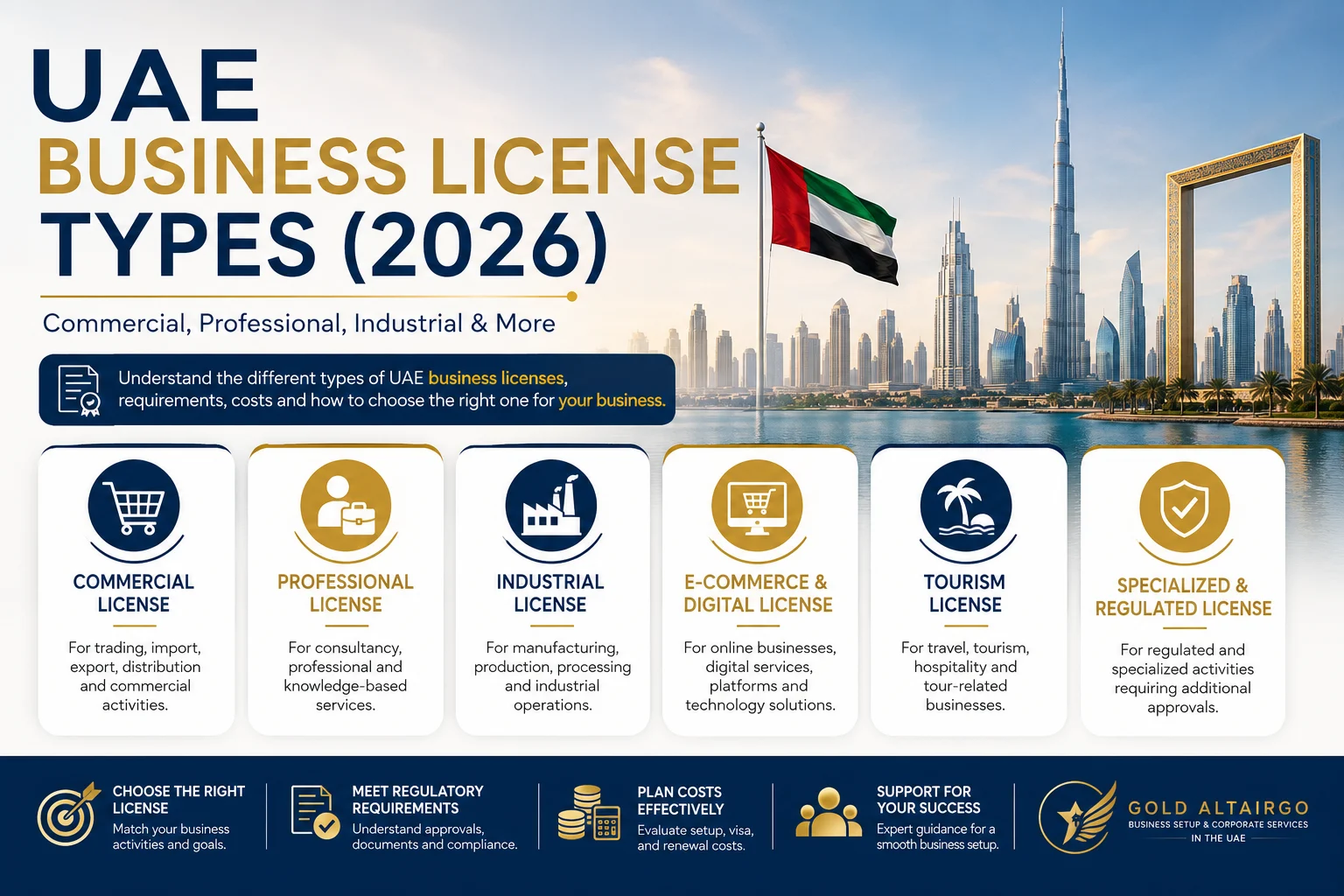
UAE Business License Types (2026): Commercial, Professional, Industrial & More
Explore the main UAE business license types in 2026 and learn how commercial, professional, industrial and digital licenses differ, including activities, costs and setup considerations.
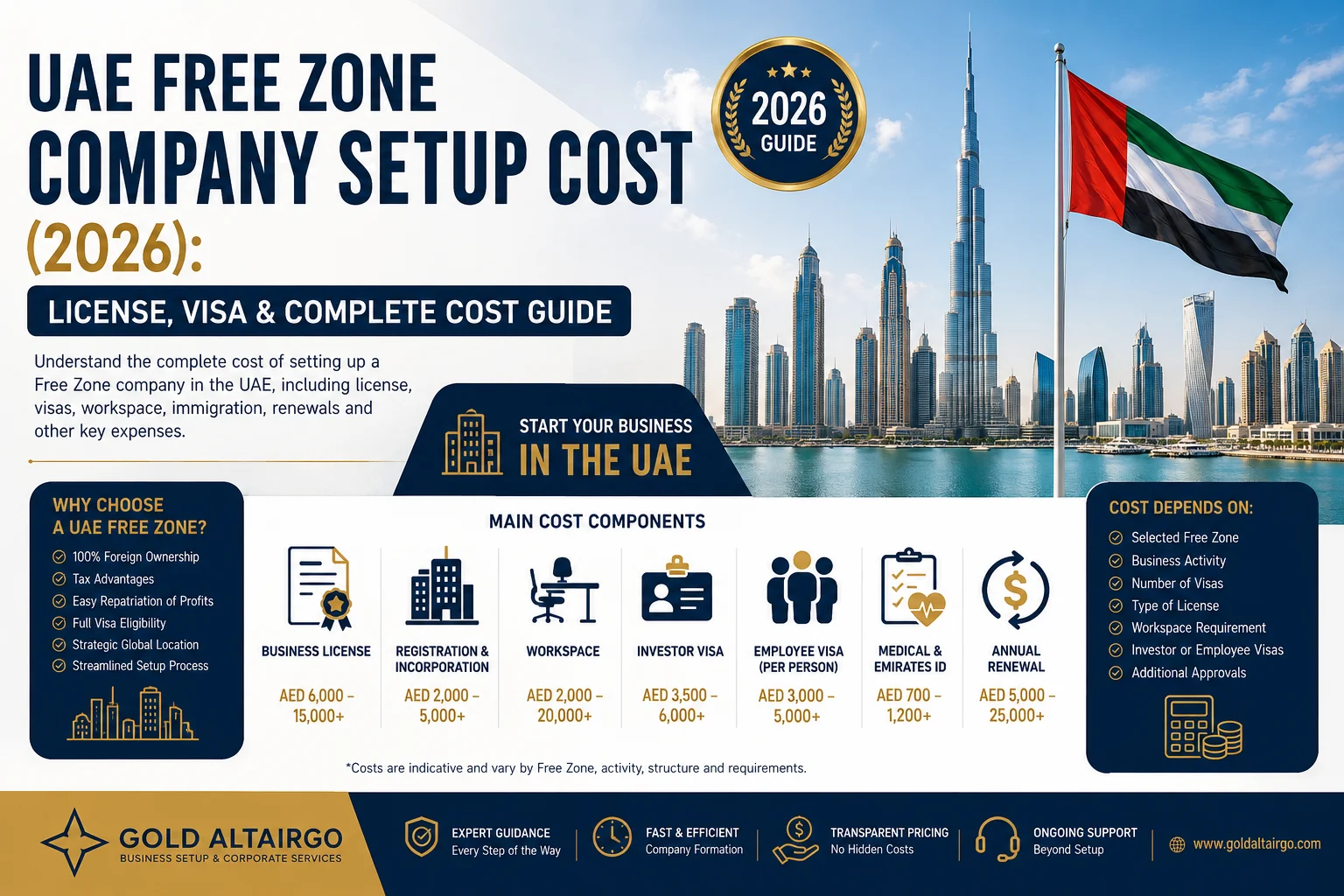
UAE Free Zone Company Setup Cost (2026): License, Visa & Complete Cost Guide
Understand the UAE Free Zone company setup cost in 2026, including license fees, visas, workspace, immigration, renewal costs and other expenses investors should consider.
Stay ahead with UAE business insights
Monthly briefings from our advisory team: regulatory updates, tax alerts, growth strategies and market opportunities across the UAE and GCC.
- • Business updates and regulatory news
- • Corporate Tax and VAT insights
- • Growth strategies and market opportunities