
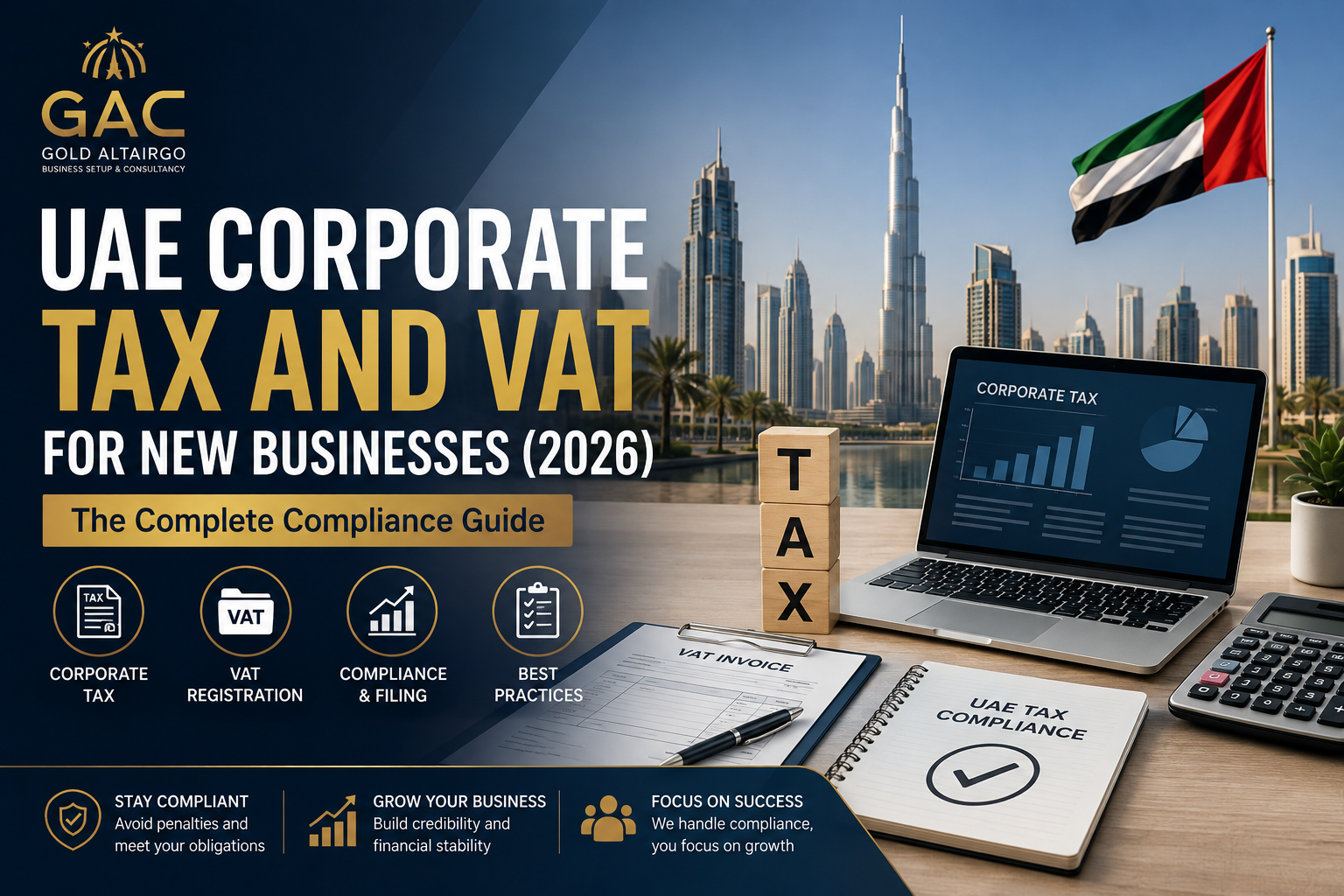
UAE Corporate Tax and VAT for New Businesses (2026): The Complete Compliance Guide
Learn everything about UAE Corporate Tax and VAT for new businesses in 2026, including registration requirements, compliance obligations, filing procedures, common mistakes, and best practices to keep your business fully compliant.
Introduction
The introduction of Corporate Tax and Value Added Tax (VAT) has transformed the business compliance landscape in the United Arab Emirates. Every entrepreneur establishing a company in the UAE should understand how these taxes work, whether they apply to their business, and how to remain compliant with local regulations.
Although the UAE continues to offer one of the world's most attractive business environments, compliance has become an essential part of operating successfully. Understanding UAE Corporate Tax and VAT from the beginning helps businesses avoid penalties, maintain accurate financial records, and build credibility with customers, suppliers, banks, and government authorities.
Whether you are launching a Free Zone company, establishing a Mainland business, or expanding an international operation into the UAE, this guide explains everything new business owners should know about Corporate Tax and VAT in 2026.
1. What is UAE Corporate Tax?
Corporate Tax is a direct tax imposed on the taxable profits of businesses operating in the UAE. The system was introduced to align the UAE with international tax standards while maintaining one of the world's most competitive business environments.
Corporate Tax generally applies to businesses earning taxable profits above the applicable threshold, while many smaller businesses may benefit from available relief measures depending on their circumstances.
Understanding your tax obligations before starting operations helps avoid compliance issues later and allows entrepreneurs to build accurate financial plans from the beginning.
2. What is Value Added Tax (VAT)?
VAT is an indirect tax charged on the supply of most goods and services in the UAE. Businesses meeting the registration requirements must collect VAT from customers and remit it to the Federal Tax Authority after deducting eligible input VAT.
VAT affects many day-to-day business activities including:
1. Selling products
2. Providing professional services
3. Importing goods
4. Exporting products
5. Purchasing business equipment
6. Service contracts
7. Commercial leasing
8. Digital services
Understanding how VAT works allows businesses to price their products correctly and maintain proper accounting records.
3. Why Tax Compliance Matters
Many entrepreneurs focus primarily on obtaining their trade license and opening a corporate bank account. However, maintaining ongoing tax compliance is equally important.
Proper compliance helps businesses:
1. Avoid administrative penalties.
2. Build credibility with banks.
3. Improve investor confidence.
4. Maintain accurate financial reporting.
5. Simplify annual business planning.
6. Support future financing applications.
7. Reduce regulatory risks.
Businesses that establish strong accounting practices from the beginning generally experience fewer compliance challenges as they grow.
4. Who Should Register?
Registration requirements depend on several factors, including annual turnover, business activities, legal structure, and applicable regulations.
Businesses should evaluate:
1. Expected annual revenue.
2. Nature of products or services.
3. Local and international transactions.
4. Import and export activities.
5. Free Zone or Mainland operations.
6. Future business expansion plans.
Seeking professional advice before registration can help businesses determine the appropriate compliance strategy.
5. Corporate Tax Registration Process
Businesses required to register for Corporate Tax should complete the registration process through the appropriate government platform and maintain accurate company information throughout the registration period.
Before registering, prepare the following:
1. Valid trade license.
2. Shareholder information.
3. Company incorporation documents.
4. Emirates ID or passport copies where applicable.
5. Contact information.
6. Business activity details.
7. Financial information if required.
Keeping your business information updated helps avoid unnecessary delays during the registration process.
6. VAT Registration Process
For a dedicated walkthrough, see our pillar guide to VAT registration in UAE.
Businesses that meet the VAT registration requirements should register within the applicable timeframe.
The registration process generally includes:
1. Creating an online account.
2. Completing the VAT registration application.
3. Uploading company documentation.
4. Providing business activity information.
5. Confirming expected annual turnover.
6. Receiving the VAT registration confirmation.
Businesses should continue monitoring their turnover even if they are not immediately required to register.
7. Accounting and Record Keeping
Proper bookkeeping is the foundation of successful tax compliance.
Every business should maintain organized records of:
1. Sales invoices.
2. Purchase invoices.
3. Bank statements.
4. Expense receipts.
5. Payroll records.
6. Supplier contracts.
7. Customer agreements.
8. Import and export documentation.
Maintaining accurate financial records makes tax filing significantly easier and reduces the risk of compliance issues.
8. Corporate Tax Filing
Corporate Tax compliance extends beyond registration. Businesses should prepare accurate financial information before filing their tax returns.
Preparing early provides several advantages:
1. Better financial visibility.
2. Accurate profit calculations.
3. Reduced filing errors.
4. Easier audit preparation.
5. Improved business planning.
6. Stronger financial management.
Waiting until the filing deadline often increases the likelihood of mistakes.
9. VAT Returns
Businesses registered for VAT should submit VAT returns according to the applicable reporting schedule.
Before submitting VAT returns, verify:
1. Sales records.
2. Purchase records.
3. Input VAT calculations.
4. Output VAT calculations.
5. Credit notes.
6. Debit notes.
7. Supporting documentation.
Consistent bookkeeping helps ensure that VAT returns are accurate and submitted on time.
10. Common Tax Compliance Mistakes
Many businesses encounter avoidable compliance issues because they underestimate the importance of proper financial management.
Common mistakes include:
1. Delaying Corporate Tax registration.
2. Missing VAT registration requirements.
3. Poor bookkeeping practices.
4. Losing invoices or receipts.
5. Mixing personal and business expenses.
6. Incomplete financial documentation.
7. Missing filing deadlines.
8. Failing to review accounting records regularly.
Avoiding these mistakes helps businesses maintain compliance while reducing administrative costs and potential penalties.
11. Best Practices for Business Owners
Successful companies usually establish strong compliance systems from the beginning.
Recommended best practices include:
1. Keep accounting records updated every month.
2. Separate personal and business finances.
3. Maintain organized digital records.
4. Review financial reports regularly.
5. Monitor tax deadlines.
6. Work with qualified accounting professionals when needed.
7. Keep supporting documentation for every transaction.
8. Review compliance requirements annually as the business grows.
These practices not only improve compliance but also support better financial decision-making and sustainable business growth.
12. Free Zone vs Mainland Tax Considerations
Both Free Zone and Mainland companies operating in the UAE should understand their respective Corporate Tax and VAT obligations. While certain Free Zone businesses may benefit from specific tax incentives when meeting the applicable conditions, all companies should carefully review the regulations that apply to their activities.
Before choosing your business structure, consider:
1. Nature of your business activities.
2. Target customers.
3. Local and international operations.
4. Expansion plans.
5. Compliance obligations.
6. Banking requirements.
7. Financial reporting responsibilities.
Selecting the appropriate company structure from the beginning can simplify future compliance and reduce unnecessary administrative work.
13. International Businesses Expanding into the UAE
The UAE continues to attract international investors due to its strategic location, modern infrastructure, and business-friendly environment. Companies expanding into the UAE should establish a clear compliance strategy before commencing operations.
International businesses should prepare:
1. A clear business plan.
2. Corporate structure documentation.
3. Shareholder information.
4. Financial projections.
5. Business activity descriptions.
6. Accounting procedures.
7. Internal compliance policies.
Proper preparation helps create a smooth business setup process while supporting long-term operational success.
14. Building a Strong Financial Foundation
Tax compliance is not simply about meeting legal requirements-it also strengthens the overall financial health of a business.
Companies that maintain organized accounting systems often benefit from:
1. Better financial decision-making.
2. Improved cash flow management.
3. Easier access to business financing.
4. Stronger relationships with banks.
5. Greater investor confidence.
6. Reduced operational risks.
7. Faster business growth.
Treating compliance as an investment rather than an obligation creates long-term value for the business.
15. Frequently Asked Questions
Do all UAE companies need to register for Corporate Tax?
Registration requirements depend on the company's activities, legal structure, and applicable regulations. Businesses should review their obligations based on current UAE tax rules.
Does every company need VAT registration?
VAT registration depends on the applicable registration thresholds and business activities. Companies should monitor their turnover regularly to determine whether registration is required.
Can Free Zone companies benefit from tax incentives?
Some Free Zone companies may qualify for tax benefits if they meet the applicable legal conditions. Business owners should evaluate these requirements carefully before making assumptions.
What records should businesses maintain?
Companies should keep organized accounting records, invoices, contracts, bank statements, payroll information, supplier documentation, and other supporting financial records.
How can businesses reduce compliance risks?
Maintaining accurate bookkeeping, monitoring filing deadlines, keeping financial records organized, and seeking professional guidance when necessary significantly reduces compliance risks.
Conclusion
Understanding UAE Corporate Tax and VAT is an essential part of establishing and growing a successful business in the Emirates.
Entrepreneurs who implement strong accounting practices, maintain accurate financial records, and comply with applicable regulations are better positioned for sustainable long-term growth.
Rather than viewing compliance as an administrative burden, successful businesses treat it as an important component of sound financial management. Proper preparation helps reduce operational risks, improve relationships with banks and investors, and create a solid foundation for future expansion.
Ready to Build a Fully Compliant UAE Business?
Starting a business in the UAE involves much more than obtaining a trade license. From company formation and banking preparation to Corporate Tax, VAT, and ongoing compliance, every stage plays a critical role in long-term success.
At Gold Altairgo, we help entrepreneurs, startups, SMEs, and international investors navigate every step of the UAE business journey. Our experienced consultants provide practical guidance on company formation, licensing, corporate structuring, business banking preparation, and regulatory compliance.
Whether you're launching a new company, expanding into the UAE, or ensuring your business remains fully compliant, our team is ready to support you with professional, transparent, and tailored advisory services.
Start your UAE business journey with confidence.
Website: https://www.goldaltairgo.com
Email: elotfi@goldaltairgo.com
Book a consultation today and let Gold Altairgo help you build a strong, compliant, and successful business in the United Arab Emirates.
Tax and accounting support belongs in the formation budget from day one. Our 2026 UAE company formation cost guide explains how compliance fits into the total first-year cost.
Frequently asked questions
Do all businesses in the UAE have to pay Corporate Tax?
No. Corporate Tax applies based on the UAE Corporate Tax Law and taxable income. Some businesses may qualify for exemptions or relief depending on their legal status, activities, and applicable regulations.
When should a new business register for Corporate Tax in the UAE?
Businesses should complete Corporate Tax registration according to the timelines announced by the Federal Tax Authority (FTA). Registering on time helps avoid administrative penalties.
Is VAT registration mandatory for every new company?
Not always. VAT registration depends on the company's taxable supplies and whether the business meets the mandatory registration threshold established by the FTA.
What documents are required for Corporate Tax and VAT registration?
Typical documents include the trade license, Emirates ID or passport of shareholders, incorporation documents, business contact details, and other supporting information requested during the application process.
Can Free Zone companies benefit from Corporate Tax incentives?
Yes. Certain qualifying Free Zone companies may benefit from preferential Corporate Tax treatment if they satisfy the applicable legal conditions and continue meeting compliance requirements.
What happens if a company fails to register or submit tax returns?
Failure to register, file returns, or comply with tax obligations may result in administrative penalties and additional compliance requirements imposed by the Federal Tax Authority.
How often must VAT returns be submitted in the UAE?
VAT return filing frequency depends on the schedule assigned by the Federal Tax Authority, which is commonly quarterly but may differ depending on the business.
Can foreign investors register for Corporate Tax and VAT?
Yes. Foreign-owned companies operating in the UAE must comply with Corporate Tax and VAT regulations in the same way as other eligible businesses.
Why is proper bookkeeping important for Corporate Tax compliance?
Accurate accounting records help businesses calculate taxable income correctly, prepare tax returns efficiently, and demonstrate compliance during audits or regulatory reviews.
Can Gold Altairgo help with UAE Corporate Tax and VAT compliance?
Yes. Gold Altairgo assists entrepreneurs, startups, SMEs, and international investors with company formation, Corporate Tax registration, VAT registration, compliance guidance, and business advisory services throughout the UAE.
Continue exploring
Related services
- Company FormationMainland, Free Zone, Offshore, branch and representative office setup across the UAE and GCC.
- Corporate AdvisoryStructuring, M&A, shareholder restructuring and expansion advisory for boards and founders.
- Business Admin & Back-OfficeMonthly outsourced administration and structured back-office support for UAE SMEs and growing companies.
Country guides
Related articles
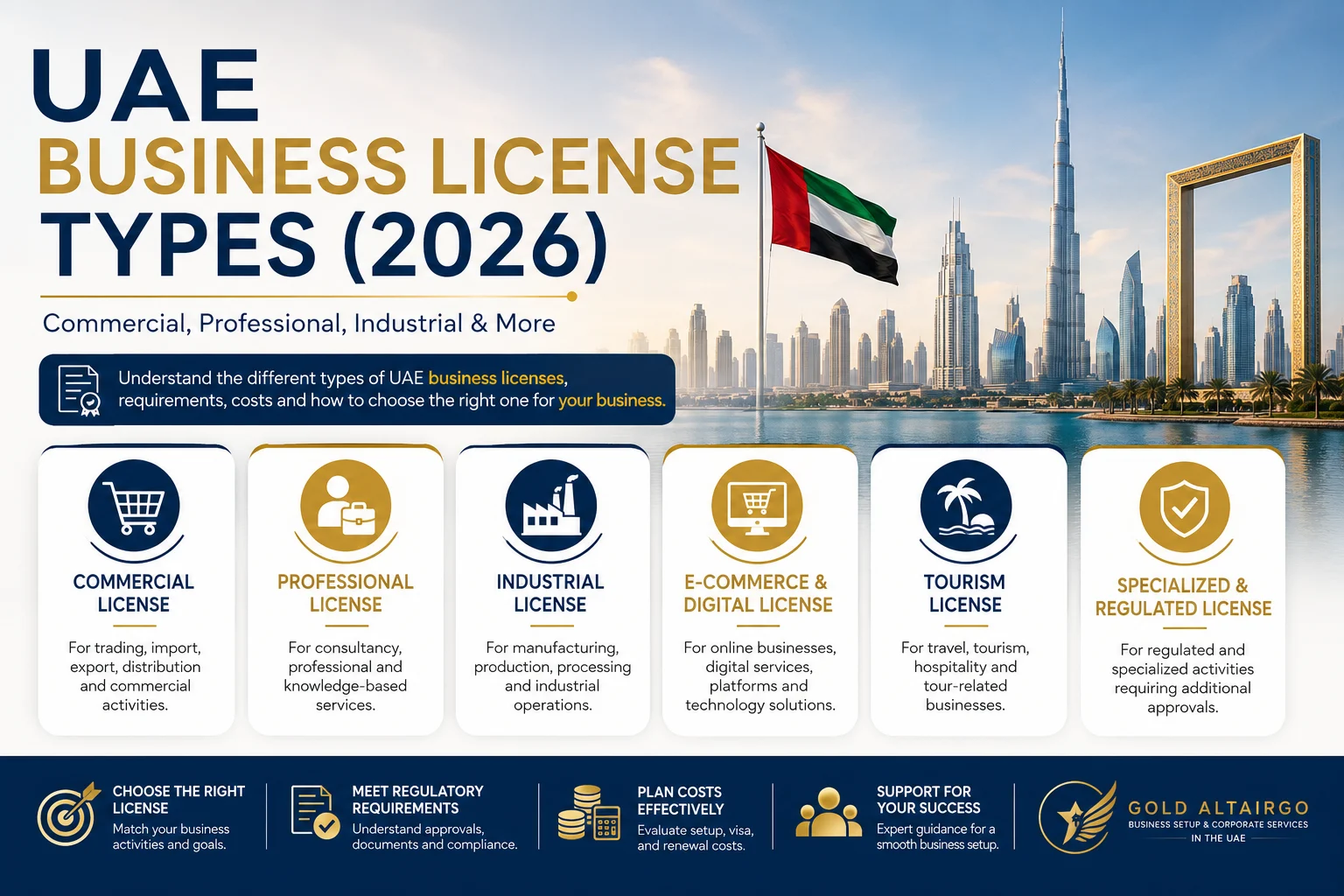
UAE Business License Types (2026): Commercial, Professional, Industrial & More
Explore the main UAE business license types in 2026 and learn how commercial, professional, industrial and digital licenses differ, including activities, costs and setup considerations.
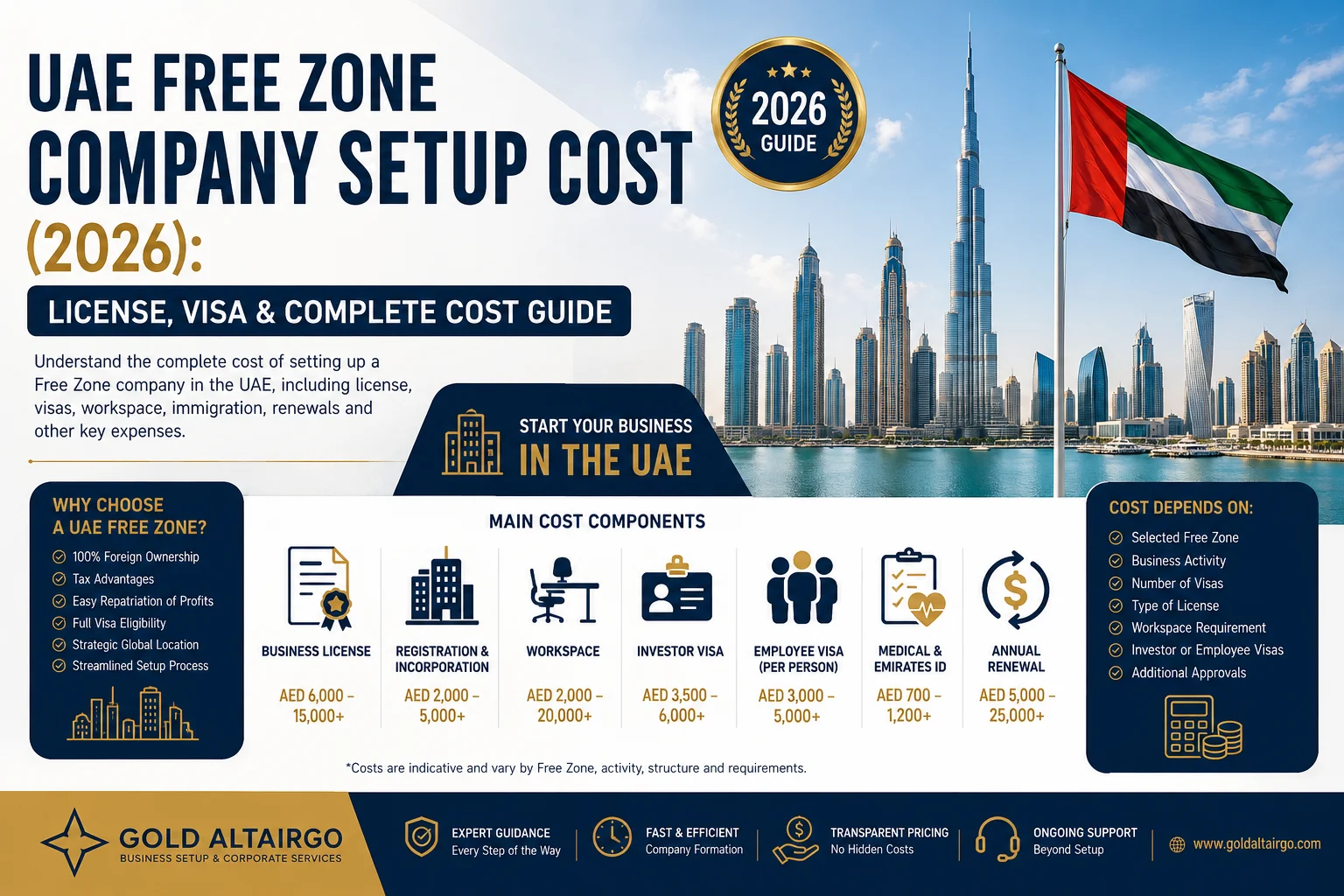
UAE Free Zone Company Setup Cost (2026): License, Visa & Complete Cost Guide
Understand the UAE Free Zone company setup cost in 2026, including license fees, visas, workspace, immigration, renewal costs and other expenses investors should consider.

Dubai Mainland Company Formation (2026): Cost, License, Visa & Setup Guide
Planning to establish a Mainland company in Dubai? This 2026 guide explains Dubai Mainland company formation, including licensing, business activities, ownership, office requirements, visas, costs, registration steps and key considerations for investors.
Stay ahead with UAE business insights
Monthly briefings from our advisory team: regulatory updates, tax alerts, growth strategies and market opportunities across the UAE and GCC.
- • Business updates and regulatory news
- • Corporate Tax and VAT insights
- • Growth strategies and market opportunities